LMHRA-R-[PV-24-001], Version 001 — Regulations on Pharmacovigilance in Liberia
Currentness under review. Whether this instrument remains applicable is under review. Consult the later instruments and source context below before relying on it.
Link directly to a passage with its anchor — for example #pdf-page-1 — to open it highlighted. This reference version is generated from the authority’s publication and does not replace it. Language: English.
Contents
LIBERIA MEDICINES & HEALTH PRODUCTS REGULATORY AUTHORITY (LMHRA)
Monrovia, Liberia
Cell: +231-888-140-555 / +231-777-140-555
Email: info@lmhra.gov.lr; Website: www.lmhra.gov.lr
REGULATIONS ON PHARMACOVIGILANCE IN LIBERIA
LMHRA
Regulation Code LMHRA-R-[PV-24-001]
Date of Adoption 28th May 2025
Version No. 001
1
Original PDF page 1 — retained source fields, tables and layout.
Declaration
This regulation, made in the fulfilment of Part III, count 5 and Part IV, Section 2, count 1h of the Act of 2010, establishing the Liberia Medicines and Health Products Regulatory Authority (LMHRA), which authorizes the Authority to conduct Pharmacovigilance of medicines and health products within the borders of the Republic of Liberia. The management, with approval from the Board of Directors, hereby promulgates this regulation designed for the conduct of Pharmacovigilance.
2
Original PDF page 2 — retained source fields, tables and layout.
PART I
Section 1: Citation
These Regulations shall be cited as the Liberia Pharmacovigilance Regulations for all medicines and health products, including vaccines, biological and gene therapy products, and shall be deemed to come into operation on 28/May/2025.
Section 2: Scope
Section 3: Application
These Regulations shall apply to all medicines and health products within the borders of Liberia.
Section 3: Terms and definitions
In these Regulations, unless the context otherwise requires –
1. Act - means the Liberia Medicines and Health Products Regulatory Authority (LMHRA) Act;
2. Authority – means the Liberia Medicines and Health Products Regulatory Authority.
3. Active surveillance - means active measures taken to monitor adverse events;
4. Adverse Drug Reaction (ADR) - means a response to a medicine which is noxious and unintended, and which occurs at a dose normally used in humans for prophylaxis, diagnosis, or therapy of disease or the modification of physiological function;
5. Adverse Events (AE) - means any untoward medical occurrence that may present during treatment with a pharmaceutical product, but which does not necessarily have a causal relationship with the treatment. An adverse event can therefore be any unfavorable and unintended sign (including an abnormal laboratory finding), symptom, or disease temporarily associated with the use of the product, whether or not related to the product.
6. Audit - means a systematic, disciplined, independent, and documented process for obtaining evidence and evaluating the evidence objectively to determine the extent to which the audit criteria are fulfilled, contributing to the improvement of risk management, control, and governance processes;
7. Cosmetic product safety report - means all available data on the undesirable effects and serious undesirable effects to the cosmetic product or, where relevant, other cosmetic products, including statistical data;
8. Development safety Update Report (DSUR) - a periodic report on a drug under development (including marketed products that are under further studies) deemed to be recognized by the Authority.
9. Healthcare providers - means medically qualified persons including physicians, dentists, pharmacists, nurses, Physician assistant, pharmaceutical technicians, laboratory technicians, laboratory technologists and traditional medicine practitioners;
6
Original PDF page 6 — retained source fields, tables and layout.
10. Herbal medicines - includes crude plant materials such as leaves, flowers, fruit, and seed, herbal materials such as fresh juices, gums, fixed oils, essential oils, and dry powders, herbal preparations such as comminuted or powdered herbal materials, or extracts, tinctures and fatty oils of herbal materials and finished herbal products such as dosage forms preparations made from one or more herbs that may contain excipients used for therapeutic purposes;
11. Individual Case Safety Report (ICSR) – refers to the format and content for the submission of an individual report of suspected adverse reactions in relation to a medicinal product that occur in a single patient at a specific point of time. A valid ICSR should include at least one identifiable reporter, one single identifiable patient, at least one suspect adverse reaction, and at least one suspect medicinal product.
12. Lack of efficacy - means unexpected failure of a medicines or health product to produce the intended effect as determined by previous scientific investigation;
13. Marketing Authorization Holder (MAH) - means an individual or a corporate entity responsible for placing a pharmaceutical product in the market;
14. Medication error - means any unintended failure in the drug treatment process that leads to, or has the potential to lead to, harm to the patient. Such events may be related to professional practice, health care products, procedures and systems, including prescribing; order communication; product labelling, packaging and nomenclature; compounding; dispensing; distribution; administration; education; monitoring; storing; and use; thereby present a major public health burden.
15. National Pharmacovigilance Centre (NPC) - means a single, governmentally recognized Centre established under regulation 4 of these Regulations;
16. Over dosage - means accidental or intentional use of a drug or medicine in an amount that is higher than normally used.
17. Pharmacovigilance (PV) - means science and activities relating to the detection, assessment, understanding and prevention of adverse effects or any other possible medicine-related problems;
18. Pharmacovigilance system master file - means a file ascribed to in preceding regulations is an accuracy reflection of information of the Pharmacovigilance system.
19. Public Health Programs - means programs under the Ministry of Health responsible for health including National AIDS Control Program (NACP), National Malaria Control Program (NMCP), National Tuberculosis and Leprosy Program (NTLP) and Expanded Program for Immunization (EPI);
20. Periodic Benefit-Risk Evaluation Report (PBRER) - means a comprehensive safety evaluation report produced by the Marketing Authorization Holders (individuals or business that is granted authorization to market the medicine) at defined time points after a medicine has been given;
21. Products regulated - means medicines and health products that require authorization before they can be sold;
7
Original PDF page 7 — retained source fields, tables and layout.
22. Periodic Safety Update Report (PSUR) - means an update of the world-wide safety experience of a product obtained at defined times post marketing authorization.
23. Risk-benefit balance - means an evaluation of the positive therapeutic effects of the medicinal product in relation to the risks (any risk relating to the quality, safety or efficacy of the medicinal product as regards patients’ health or public health
24. Risk Management System - means a set of Pharmacovigilance activities and interventions designed to identify, characterize, prevent or minimize risks relating to medicinal products, including the assessment of the effectiveness of those activities and interventions;
25. Risks related to use of a medicinal product - means any risk relating to the quality, safety or efficacy of the medicinal product as regards patients’ health or public health and any risk of undesirable effects on the environment;
26. Serious Adverse Event (SAE) - means adverse event that results in death, is life-threatening, requires in-patient hospitalization or prolongation of existing hospitalization, results in persistent or significant disability or incapacity, or is a congenital anomaly/birth defect;
27. Serious Adverse Drug Reaction - means an adverse reaction which results in death, is life-threatening, requires inpatient hospitalization or prolongation of existing hospitalization, results in persistent or significant disability or incapacity, or is a congenital anomaly/birth defect;
28. Serious undesirable effects - means an undesirable effect which results in temporary or permanent functional incapacity, disability, hospitalization, congenital anomalies, or an immediate vital risk or death;
29. Life-threatening - means a reaction in which the patient was at risk of death at the time of the reaction but not including a reaction that hypothetically might have caused death if more severe;
30. Signal - means reported information on a possible causal relationship between an adverse event and a medicine the relationship being unknown or incompletely documented previously;
31. Summary Product Characteristics (SmPC) - means a document describing the properties and the officially approved conditions of use of a medicine. An SmPC forms the basis of information for healthcare professionals on how to use the medicine safely and effectively;
32. Unexpected adverse drug reaction - means an adverse reaction, the nature, severity or outcome of which is not consistent with domestic labelling, marketing authorization, or the SmPC.
8
Original PDF page 8 — retained source fields, tables and layout.
Section 5: Collection, management, and reporting requirements for adverse events
1. Duty to Report Adverse Events, Adverse Drug Reactions, AEFIs, AESIs
Fatal or life-threatening, unexpected ADRs occurring in clinical investigations qualify for very rapid reporting. Regulatory agencies should be notified (e.g., by telephone, facsimile transmission, or in writing) as soon as possible but no later than 7 calendar days after first knowledge by the sponsor that a case qualifies, followed by as complete a report as possible within 8 additional calendar days.
The healthcare facilities, public health programs, manufacturers, Marketing Authorization Holders, or any other designated person shall have a duty to report any of the following to the Authority-
a) all suspected Adverse Drug Reactions as a result of prescription and non-prescription;
b) unexpected reactions, regardless of their nature or severity, whether or not consistent with product information or labelling;
27
Original PDF page 27 — retained source fields, tables and layout.
c) all adverse drug reactions regardless of whether or not the product was used in accordance with the product information provided by the company marketing the product;
d) all adverse events following immunization or use of biological;
e) all adverse events, incidences, malfunctions associated use of medical devices or vitro diagnostic medical devices;
f) an observed increase in frequency of a given reaction;
g) a serious reaction, whether expected or not;
h) all suspected Adverse Drug Reactions associated with drug-drug, drug-food or drug-food supplement interactions;
i) adverse Drug Reactions in special field of interest including drug abuse and drug use in pregnancy and during lactation;
j) adverse Drug Reactions occurring from overdose or medication errors;
k) unusual lack of efficacy or when suspected quality defects are observed; and
l) Product quality problems.
m) All reports of unusual failure in efficacy shall be reported to the Authority by Marketing Authorization Holder, healthcare providers, public health programs using the ADR reporting form prescribed in the First Schedule to these Regulations.
n) Medication errors that arise during routine clinical practice shall be reported to the Authority using the Adverse Drug Reaction reporting form.
2. Requirements for Patients or consumers for reporting adverse drug reactions and events
Patients or consumers may report any suspected adverse reaction or event associated with the use of a product immediately to the nearest health facility, healthcare provider or directly to the Authority by using the Adverse Drug Reaction reporting form.
3. Reporting requirements for healthcare providers
a. Health care providers shall be obliged to report to the Authority all suspected adverse reactions, events or incidences reported by patients and any quality defect issues that may arise as follows-
i. in case of suspected adverse reactions, events or incidences shall be as provided in the First Schedule;
ii. in case of filled in suspected adverse reactions, events or incidences from patients in shall be as provided in the Second Schedule.
iii. in case of any quality defect issues that may arise shall be as provided in the Quality Defect Form (QDF) of the Third Schedule to these Regulations; and
b. All healthcare providers shall be required to record Patients’ Serious Adverse Reaction that are caused by allergic reactions to a product in the Poor Quality Medicinal Products Reporting Form (PQMPRF).
28
Original PDF page 28 — retained source fields, tables and layout.
4. Requirements for adverse events reporting by manufacturers and marketing authorization holders
a. Without prejudice to the establishment of the Pharmacovigilance system and quality system provided under these Regulations, all manufacturers and marketing Authorization holders shall be required to report to the Authority any adverse reactions or events suspected to be associated with the use of their products notified to them by healthcare professionals, patients or consumers.
b. The adverse events reports shall include reports that arise from post-marketing experience, unsolicited and solicited sources, CTs, non-interventional post-registration studies, and other post-marketing studies and programs.
c. The reports shall meet requirements for reporting and recordkeeping stipulated in these Regulations.
d. Every manufacturer and marketing Authorization holder shall regularly screen the internet, including websites, webpages, blogs, vlogs, social networks, internet forums, chat rooms, and health portals or digital media for potential reports of suspected adverse reactions.
e. Every manufacturer and Marketing Authorization Holder shall report all suspected adverse reactions from medical and non-medical sources within the time specified in these Regulations.
f. All manufacturers and marketing authorization holders shall systematically assess the reports to establish a relationship to the product.
g. All manufacturers and marketing authorization holders shall regularly monitor international and domestic literature, ongoing safety and efficacy studies for any identification of adverse reaction reports or relevant safety findings regarding their products.
29
Original PDF page 29 — retained source fields, tables and layout.
Section 9: Pharmacovigilance of Other Products
1. Reporting of medical devices adverse events, incidences and malfunctions
a. All operators, users, distributors, healthcare workers, manufacturers and marketing authorization holders shall be required to report to the Authority all adverse events or incidences associated with use of the medical devices
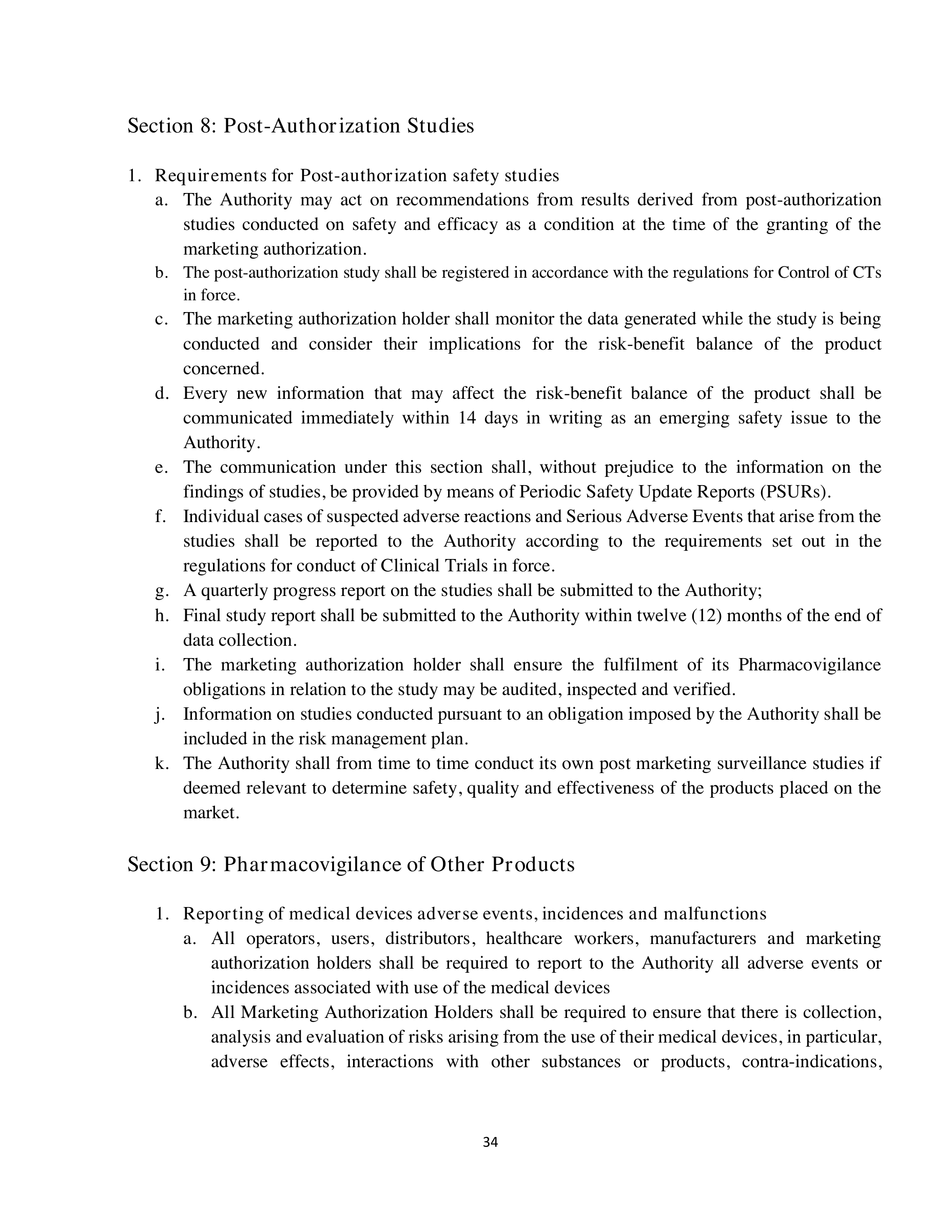
b. All Marketing Authorization Holders shall be required to ensure that there is collection, analysis and evaluation of risks arising from the use of their medical devices, in particular, adverse effects, interactions with other substances or products, contra-indications,
34
Original PDF page 34 — retained source fields, tables and layout.
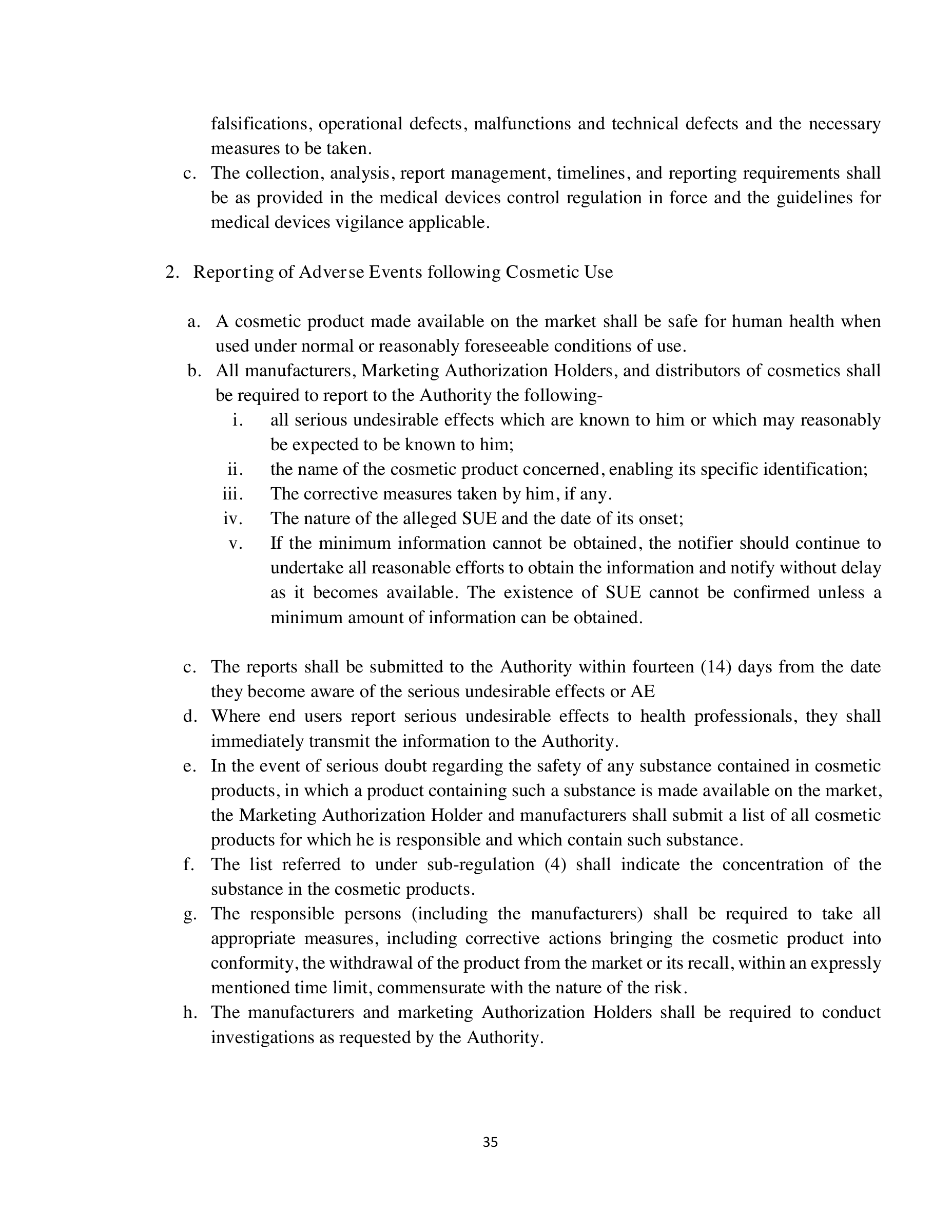
falsifications, operational defects, malfunctions and technical defects and the necessary measures to be taken.
c. The collection, analysis, report management, timelines, and reporting requirements shall be as provided in the medical devices control regulation in force and the guidelines for medical devices vigilance applicable.
35
Original PDF page 35 — retained source fields, tables and layout.
5. Reporting of falsified and or substandard products
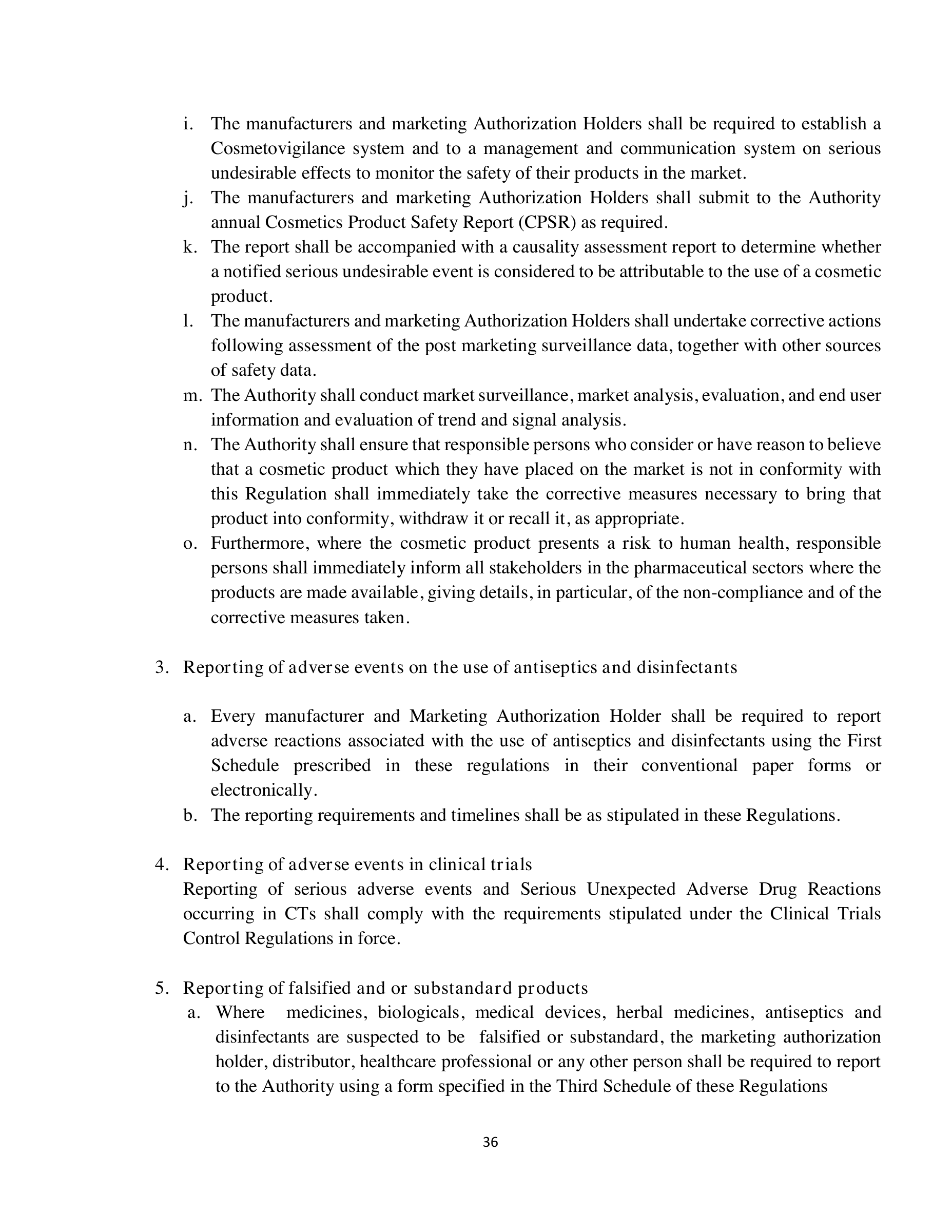
a. Where medicines, biologicals, medical devices, herbal medicines, antiseptics and disinfectants are suspected to be falsified or substandard, the marketing authorization holder, distributor, healthcare professional or any other person shall be required to report to the Authority using a form specified in the Third Schedule of these Regulations
36
Original PDF page 36 — retained source fields, tables and layout.
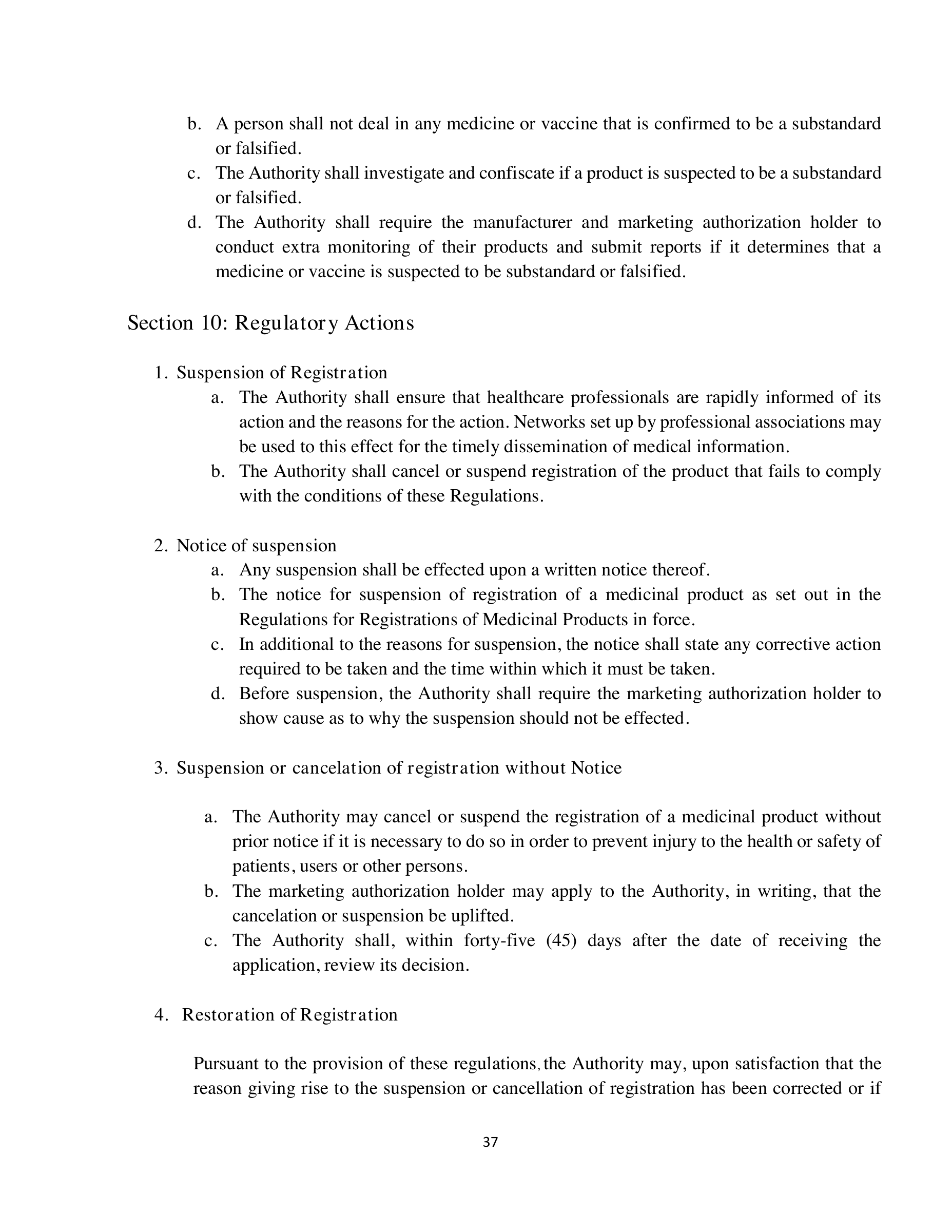
b. A person shall not deal in any medicine or vaccine that is confirmed to be a substandard or falsified.
c. The Authority shall investigate and confiscate if a product is suspected to be a substandard or falsified.
d. The Authority shall require the manufacturer and marketing authorization holder to conduct extra monitoring of their products and submit reports if it determines that a medicine or vaccine is suspected to be substandard or falsified.
Section 10: Regulatory Actions
37
Original PDF page 37 — retained source fields, tables and layout.
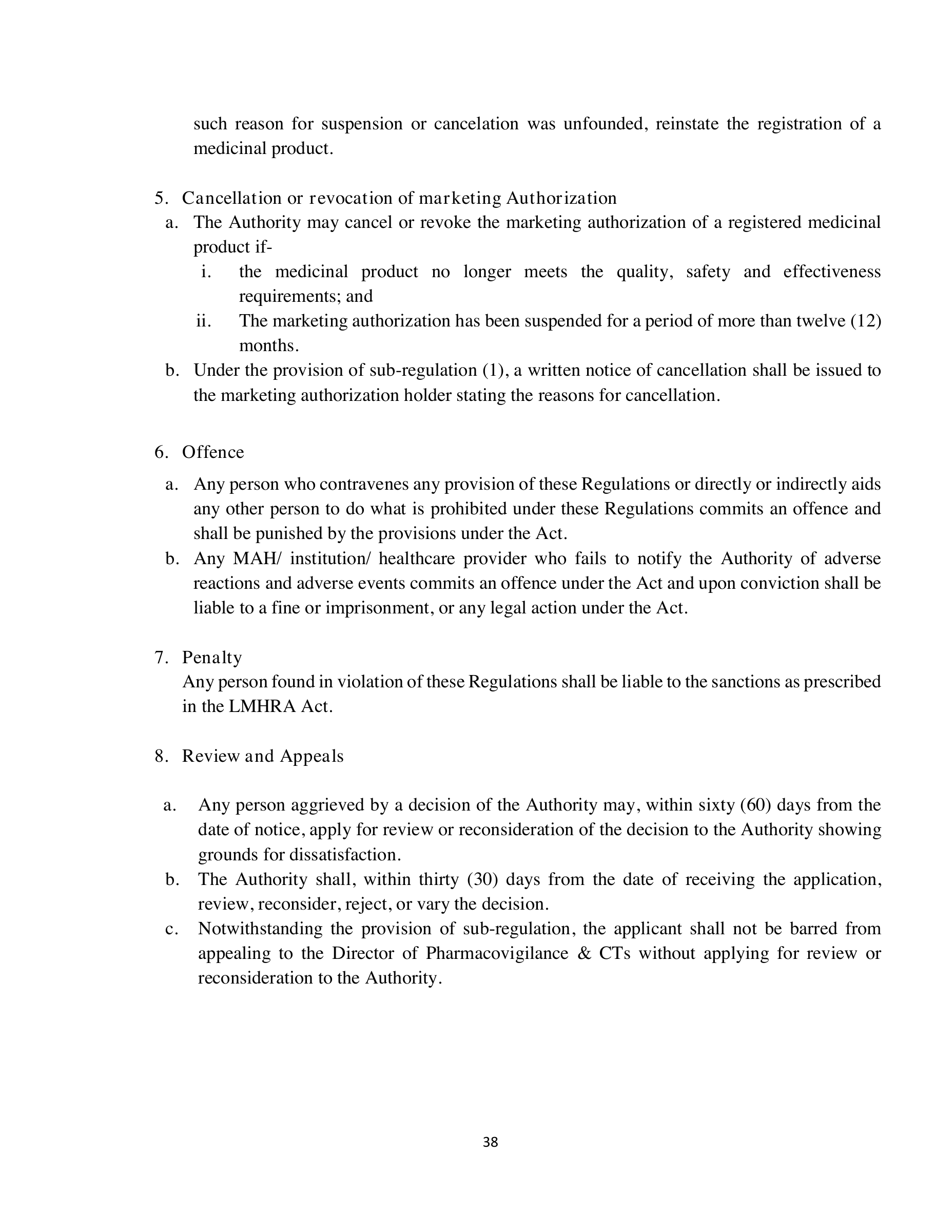
6. Offence
a. Any person who contravenes any provision of these Regulations or directly or indirectly aids any other person to do what is prohibited under these Regulations commits an offence and shall be punished by the provisions under the Act.
b. Any MAH/ institution/ healthcare provider who fails to notify the Authority of adverse reactions and adverse events commits an offence under the Act and upon conviction shall be liable to a fine or imprisonment, or any legal action under the Act.
7. Penalty
Any person found in violation of these Regulations shall be liable to the sanctions as prescribed in the LMHRA Act.
8. Review and Appeals
a. Any person aggrieved by a decision of the Authority may, within sixty (60) days from the date of notice, apply for review or reconsideration of the decision to the Authority showing grounds for dissatisfaction.
b. The Authority shall, within thirty (30) days from the date of receiving the application, review, reconsider, reject, or vary the decision.
c. Notwithstanding the provision of sub-regulation, the applicant shall not be barred from appealing to the Director of Pharmacovigilance & CTs without applying for review or reconsideration to the Authority.
38
Original PDF page 38 — retained source fields, tables and layout.
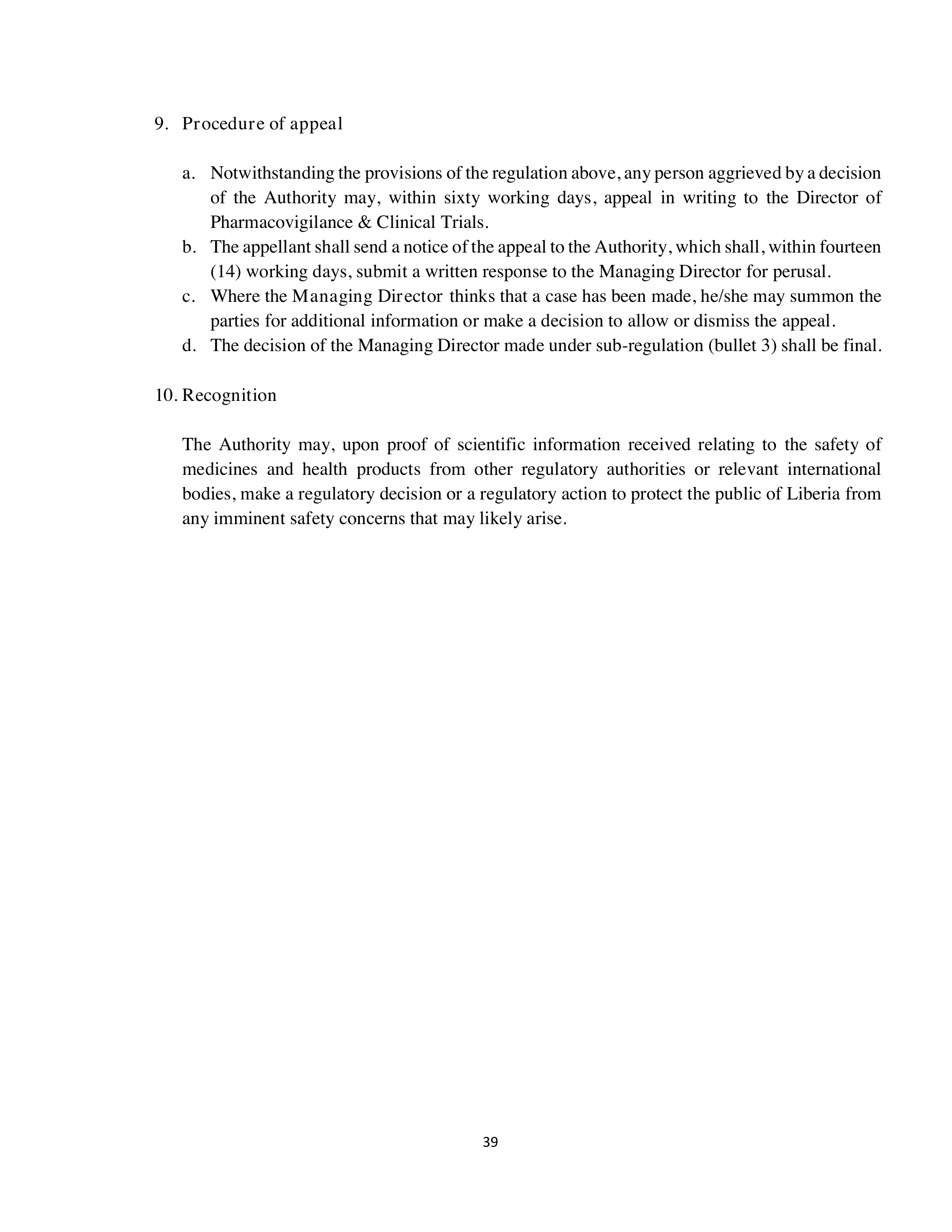
9. Procedure of appeal
a. Notwithstanding the provisions of the regulation above, any person aggrieved by a decision of the Authority may, within sixty working days, appeal in writing to the Director of Pharmacovigilance & Clinical Trials.
b. The appellant shall send a notice of the appeal to the Authority, which shall, within fourteen (14) working days, submit a written response to the Managing Director for perusal.
c. Where the Managing Director thinks that a case has been made, he/she may summon the parties for additional information or make a decision to allow or dismiss the appeal.
d. The decision of the Managing Director made under sub-regulation (bullet 3) shall be final.
10. Recognition
The Authority may, upon proof of scientific information received relating to the safety of medicines and health products from other regulatory authorities or relevant international bodies, make a regulatory decision or a regulatory action to protect the public of Liberia from any imminent safety concerns that may likely arise.
39
Original PDF page 39 — retained source fields, tables and layout.
These Regulations shall become effective immediately upon approval by the Chairman of the Board of Directors.
The Regulations for Pharmacovigilance in Liberia are hereby promulgated and submitted by the Managing Director of the Authority on this 26th day of September A.D. 2024 to the Board of Directors for approval.
Hon. Luke L. Bawo, Jr.
Managing Director / LMHRA
The Regulations for Pharmacovigilance in Liberia are hereby approved by the Chairman of the Board of Directors for Approval.
Approved This 3rd Day of October A. D. 2024
Dr. David Sumo
Chairman / Board of Directors
43
Original PDF page 43 — retained source fields, tables and layout.