Searchable PDF text layer
MDS — G28 Guidance on Bundling Criteria for Medical Devices within a Single MDMA Application Version Number: 1.0 Version Date: 3/5/2026 Page 1 of 17 MDS-G-028-V1/260503
Currentness under review. Whether this instrument remains applicable is under review. Consult the later instruments and source context below before relying on it.
Original page images are authoritative. Searchable text is the PDF text layer and may omit image text or contain extraction artifacts. Quote and verify against the page images.
Link directly to a passage with its anchor — for example #pdf-page-1 — to open it highlighted. This reference version is generated from the authority’s publication and does not replace it. Language: English.
MDS — G28 Guidance on Bundling Criteria for Medical Devices within a Single MDMA Application Version Number: 1.0 Version Date: 3/5/2026 Page 1 of 17 MDS-G-028-V1/260503
Table of Content Introduction _____________________________________________________________ 3 Purpose _____________________________________________________________ 3 Scope _______________________________________________________________ 3 Background __________________________________________________________ 3 Bundling Criteria _________________________________________________________ 4 Medical Device Family _________________________________________________ 4 Medical Device System _________________________________________________ 8 Medical Device Procedure Pack __________________________________________ 9 IVDs ______________________________________________________________ 10 Annexes _______________________________________________________________ 14 Annex (1): Definitions & Abbreviations ___________________________________ 15 Annex (2): List of Changes on the Previous Version _________________________ 17 Page 2 of 17 MDS-G-028-V1/260503
Introduction Purpose The purpose of this document is to specify criteria for bundling/grouping medical devices within a single medical devices marketing authorization (MDMA) application, as mentioned in the “Requirements for Medical Devices Marketing Authorization (MDS – REQ1)”. Scope This document is applicable to manufacturers or their authorized representatives who wish to bundle/group more than one type of medical device, including in-vitro medical devices (IVDs), within a single MDMA application. Background SFDA has issued this document in reference to: − Articles (1), (3) and (8) of the "Medical Devices Law" issued by the Royal Decree No. (M/54) dated 6/7/1442 H. − Articles (3.1), (10/7) and (10/8) of the "Implementing Regulation of Medical Devices Law" issued by Saudi Food and Drug Authority Board of Directors decree No. (3-29- 1443) dated 19/2/1443H. − Article (4) of the “Requirements for Medical Devices Marketing Authorization (MDS – REQ1)” related to bundling. Page 3 of 17 MDS-G-028-V1/260503
Bundling Criteria 1. Medical Device Family Medical devices may be bundled/grouped as a family within a single MDMA application only if they meet the following criteria: A. Have the same legal manufacturer. B. Have the same intended use/purpose. C. Have the same risk class. D. Have the same GMDN code definition (if available). E. Have a common physical design, construction material and manufacturing process. F. The application includes a maximum of (5) Technical Files (TFs). G. The total number of medical devices does not exceed (50) items. Examples: • A catheter with multi lengths and brand names. Can be bundled because they have same intended purposes and performances. • Steerable guide wires that are available in various lengths and possess various tip shapes and tip flexibilities. Can be bundled because they have same intended purposes and performances. • Hearing aids that are intended to amplify sound and transmit sound to the ear for adults at different amplitudes for different frequencies to enhance hearing, and only differ in colour • Bone plates that have the same intended use and indications for use, but vary in shape and size • A single model of intra ocular lenses (IOLs) that have the same optical design, intended use and indications for use, and only differ in diopter • Dual-chamber implantable cardioverter defibrillators and single-chamber implantable cardioverter defibrillators that have the same intended use and the same base software. In such cases, the dual-chamber device includes all functionality available in the single-chamber device and differs only in the number of cardiac leads. In this case, the specific indication for use for the single-chamber and dual-chamber devices may be different. Notes: 1. It is not allowed to bundle a standalone product with a set/kit within a single application even if that product is a component of the set/kit. 2. If the component/accessory is a medical device in its own right and is labelled for use with a specific device, then the device and its components/accessories are not considered a single medical device. Refer to the bundling criteria for a medical device system. Page 4 of 17 MDS-G-028-V1/260503
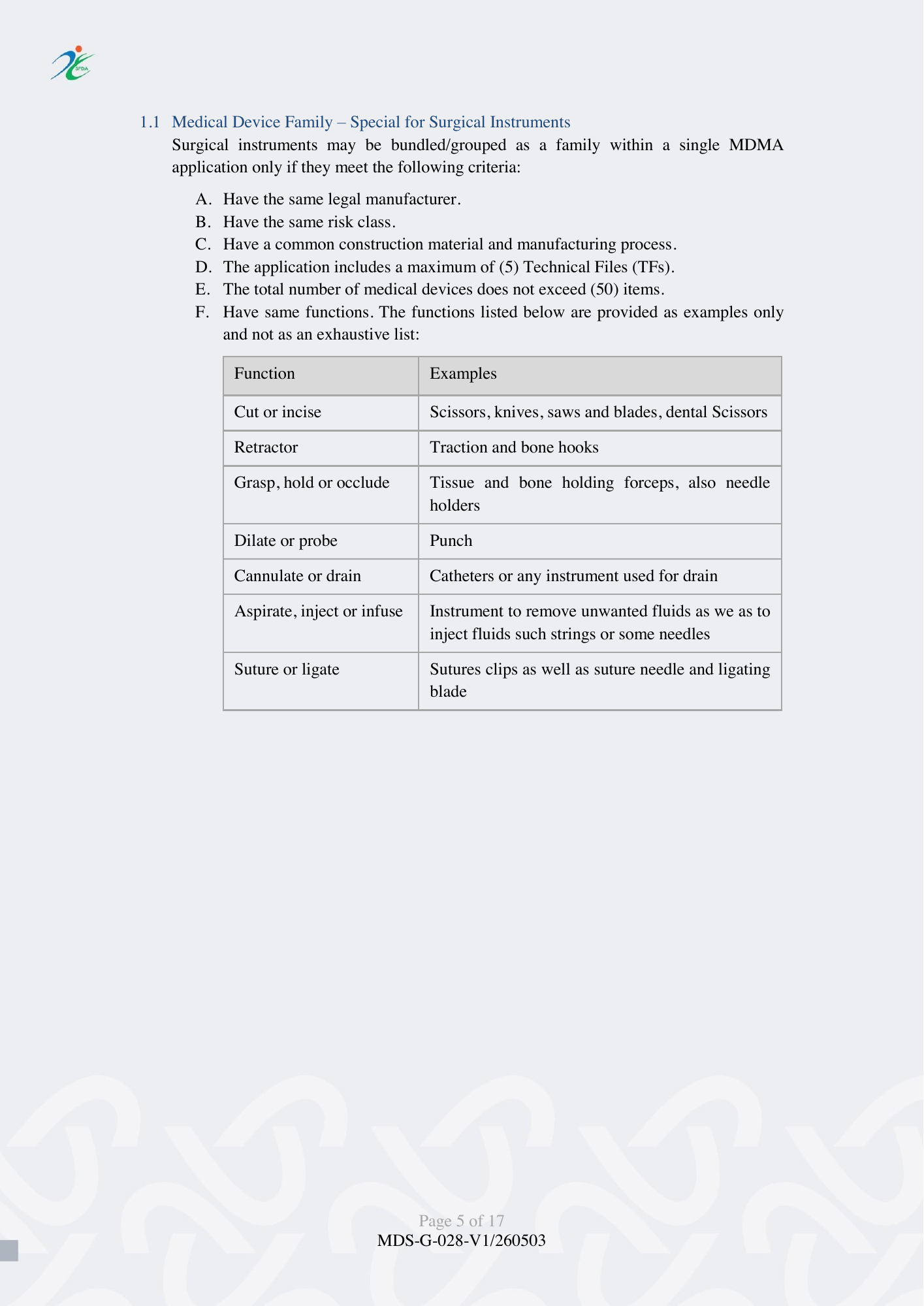
1.1 Medical Device Family – Special for Surgical Instruments Surgical instruments may be bundled/grouped as a family within a single MDMA application only if they meet the following criteria: A. Have the same legal manufacturer. B. Have the same risk class. C. Have a common construction material and manufacturing process. D. The application includes a maximum of (5) Technical Files (TFs). E. The total number of medical devices does not exceed (50) items. F. Have same functions. The functions listed below are provided as examples only and not as an exhaustive list: Function Examples Cut or incise Scissors, knives, saws and blades, dental Scissors Retractor Traction and bone hooks Grasp, hold or occlude Tissue and bone holding forceps, also needle holders Dilate or probe Punch Cannulate or drain Catheters or any instrument used for drain Aspirate, inject or infuse Instrument to remove unwanted fluids as we as to inject fluids such strings or some needles Suture or ligate Sutures clips as well as suture needle and ligating blade Page 5 of 17 MDS-G-028-V1/260503
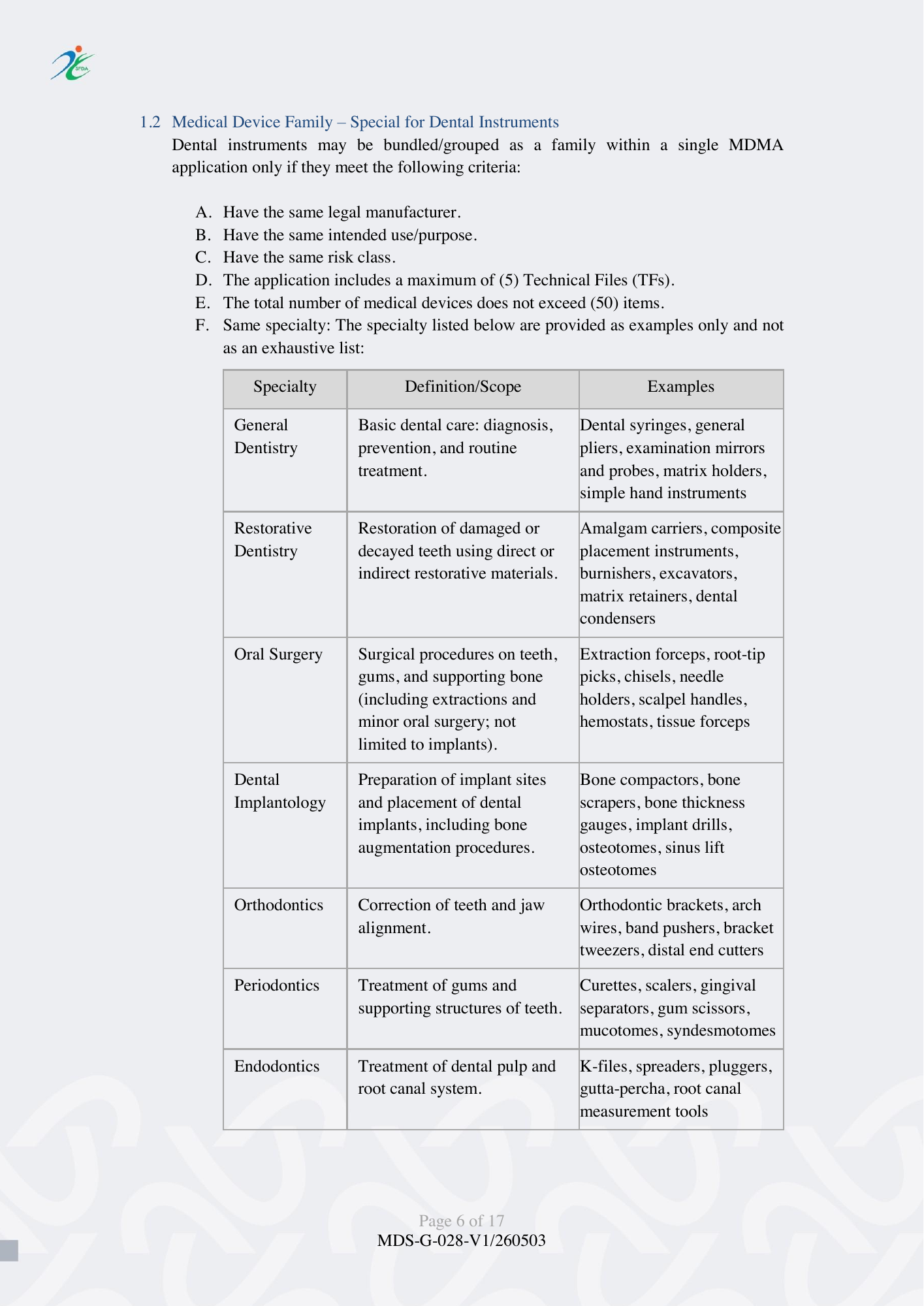
1.2 Medical Device Family – Special for Dental Instruments Dental instruments may be bundled/grouped as a family within a single MDMA application only if they meet the following criteria: A. Have the same legal manufacturer. B. Have the same intended use/purpose. C. Have the same risk class. D. The application includes a maximum of (5) Technical Files (TFs). E. The total number of medical devices does not exceed (50) items. F. Same specialty: The specialty listed below are provided as examples only and not as an exhaustive list: Specialty Definition/Scope Examples General Basic dental care: diagnosis, Dental syringes, general Dentistry prevention, and routine pliers, examination mirrors treatment. and probes, matrix holders, simple hand instruments Restorative Restoration of damaged or Amalgam carriers, composite Dentistry decayed teeth using direct or placement instruments, indirect restorative materials. burnishers, excavators, matrix retainers, dental condensers Oral Surgery Surgical procedures on teeth, Extraction forceps, root-tip gums, and supporting bone picks, chisels, needle (including extractions and holders, scalpel handles, minor oral surgery; not hemostats, tissue forceps limited to implants). Dental Preparation of implant sites Bone compactors, bone Implantology and placement of dental scrapers, bone thickness implants, including bone gauges, implant drills, augmentation procedures. osteotomes, sinus lift osteotomes Orthodontics Correction of teeth and jaw Orthodontic brackets, arch alignment. wires, band pushers, bracket tweezers, distal end cutters Periodontics Treatment of gums and Curettes, scalers, gingival supporting structures of teeth. separators, gum scissors, mucotomes, syndesmotomes Endodontics Treatment of dental pulp and K-files, spreaders, pluggers, root canal system. gutta-percha, root canal measurement tools Page 6 of 17 MDS-G-028-V1/260503
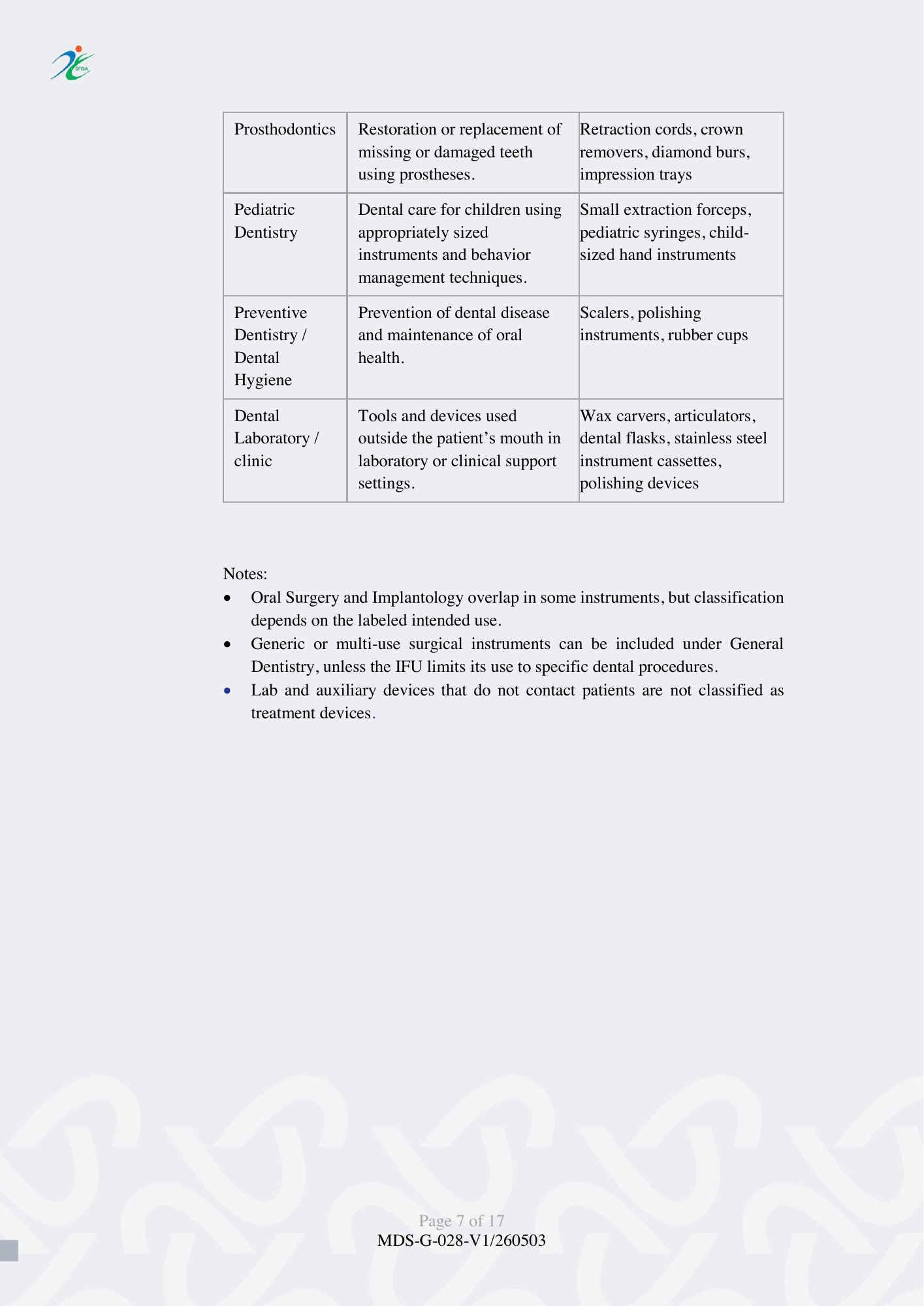
Prosthodontics Restoration or replacement of Retraction cords, crown missing or damaged teeth removers, diamond burs, using prostheses. impression trays Pediatric Dental care for children using Small extraction forceps, Dentistry appropriately sized pediatric syringes, child- instruments and behavior sized hand instruments management techniques. Preventive Prevention of dental disease Scalers, polishing Dentistry / and maintenance of oral instruments, rubber cups Dental health. Hygiene Dental Tools and devices used Wax carvers, articulators, Laboratory / outside the patient’s mouth in dental flasks, stainless steel clinic laboratory or clinical support instrument cassettes, settings. polishing devices Notes: • Oral Surgery and Implantology overlap in some instruments, but classification depends on the labeled intended use. • Generic or multi-use surgical instruments can be included under General Dentistry, unless the IFU limits its use to specific dental procedures. • Lab and auxiliary devices that do not contact patients are not classified as treatment devices. Page 7 of 17 MDS-G-028-V1/260503
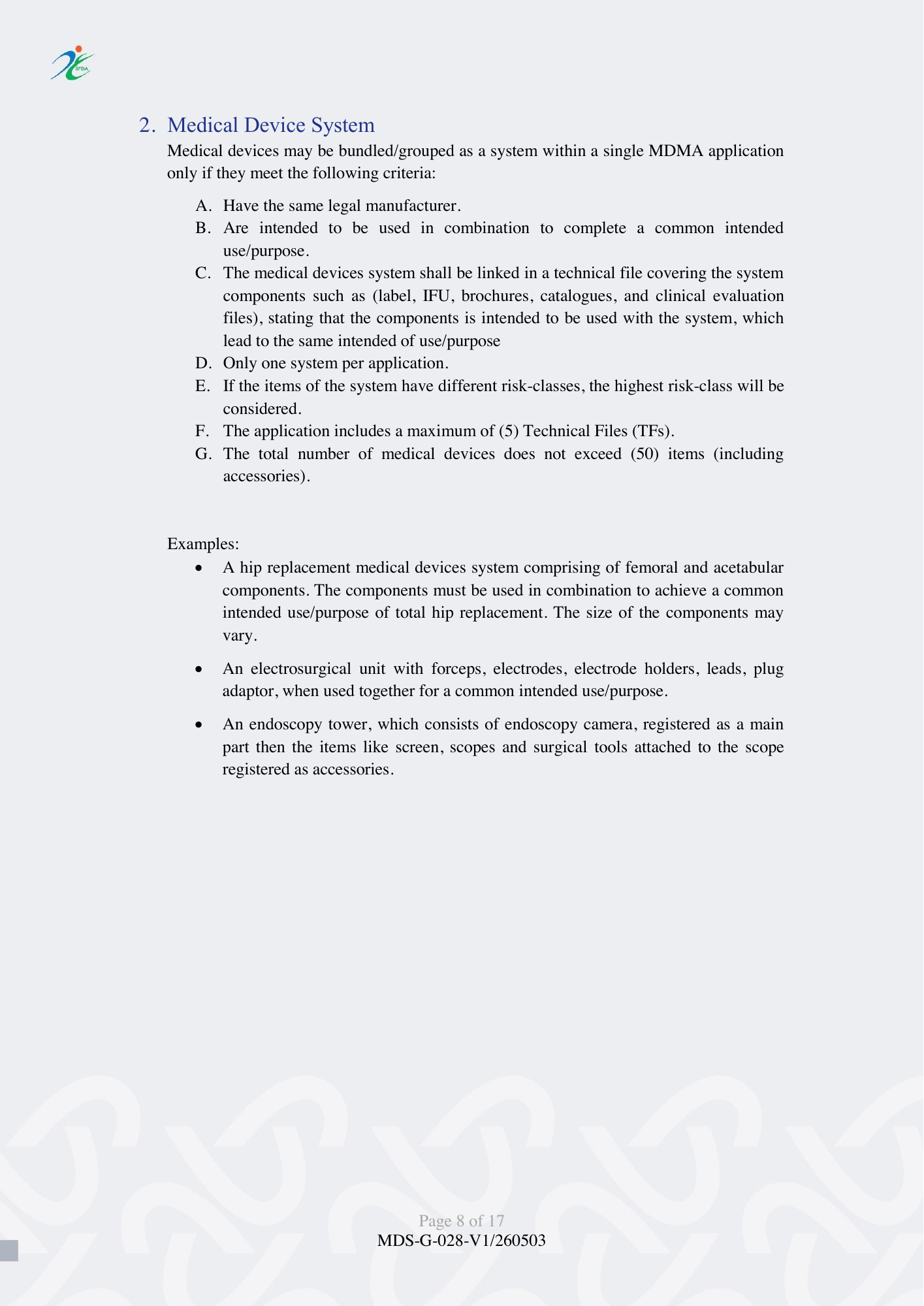
2. Medical Device System Medical devices may be bundled/grouped as a system within a single MDMA application only if they meet the following criteria: A. Have the same legal manufacturer. B. Are intended to be used in combination to complete a common intended use/purpose. C. The medical devices system shall be linked in a technical file covering the system components such as (label, IFU, brochures, catalogues, and clinical evaluation files), stating that the components is intended to be used with the system, which lead to the same intended of use/purpose D. Only one system per application. E. If the items of the system have different risk-classes, the highest risk-class will be considered. F. The application includes a maximum of (5) Technical Files (TFs). G. The total number of medical devices does not exceed (50) items (including accessories). Examples: • A hip replacement medical devices system comprising of femoral and acetabular components. The components must be used in combination to achieve a common intended use/purpose of total hip replacement. The size of the components may vary. • An electrosurgical unit with forceps, electrodes, electrode holders, leads, plug adaptor, when used together for a common intended use/purpose. • An endoscopy tower, which consists of endoscopy camera, registered as a main part then the items like screen, scopes and surgical tools attached to the scope registered as accessories. Page 8 of 17 MDS-G-028-V1/260503
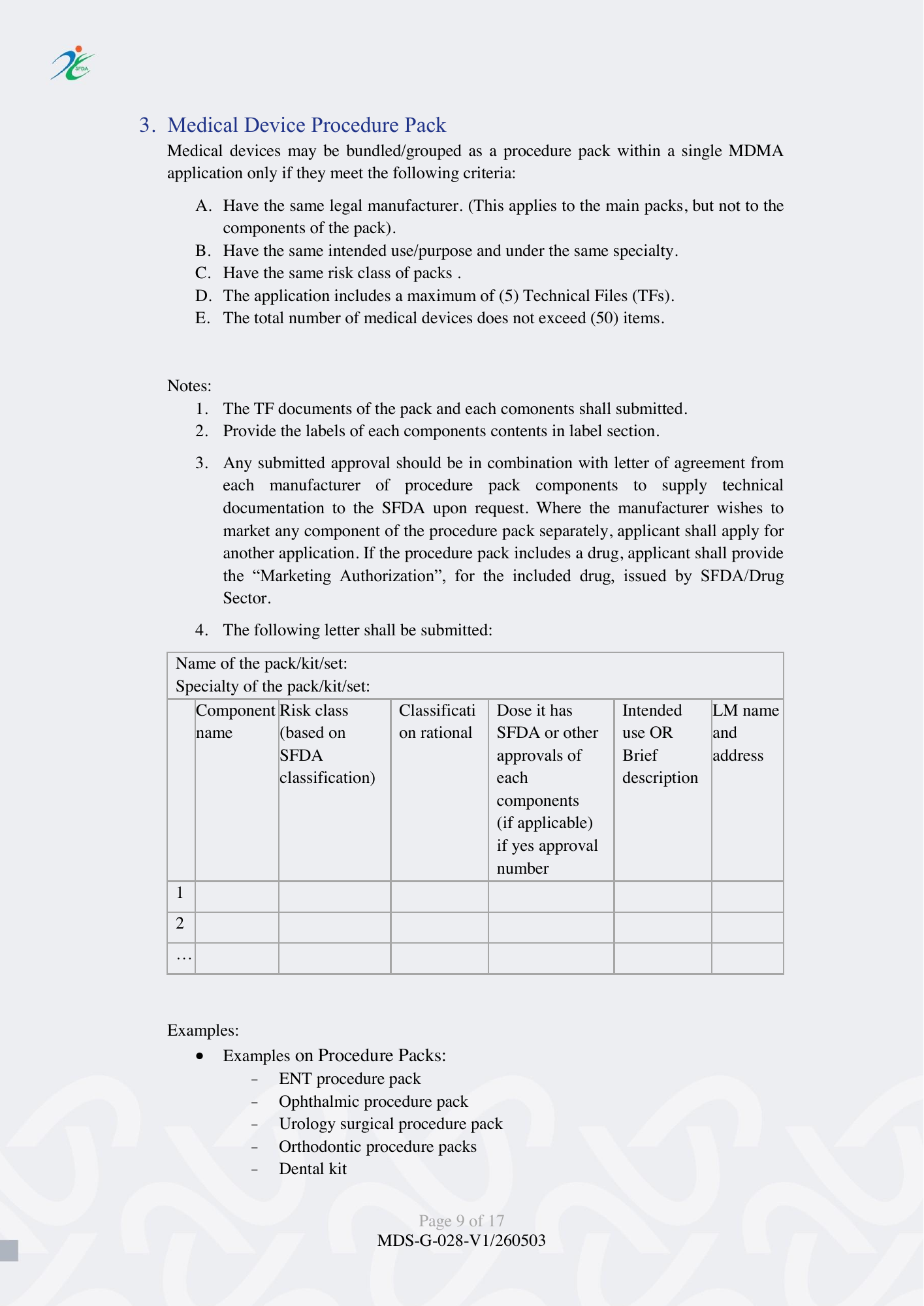
3. Medical Device Procedure Pack Medical devices may be bundled/grouped as a procedure pack within a single MDMA application only if they meet the following criteria: A. Have the same legal manufacturer. (This applies to the main packs, but not to the components of the pack). B. Have the same intended use/purpose and under the same specialty. C. Have the same risk class of packs . D. The application includes a maximum of (5) Technical Files (TFs). E. The total number of medical devices does not exceed (50) items. Notes: 1. The TF documents of the pack and each comonents shall submitted. 2. Provide the labels of each components contents in label section. 3. Any submitted approval should be in combination with letter of agreement from each manufacturer of procedure pack components to supply technical documentation to the SFDA upon request. Where the manufacturer wishes to market any component of the procedure pack separately, applicant shall apply for another application. If the procedure pack includes a drug, applicant shall provide the “Marketing Authorization”, for the included drug, issued by SFDA/Drug Sector. 4. The following letter shall be submitted: Name of the pack/kit/set: Specialty of the pack/kit/set: Component Risk class Classificati Dose it has Intended LM name name (based on on rational SFDA or other use OR and SFDA approvals of Brief address classification) each description components (if applicable) if yes approval number 1 2 … Examples: • Examples on Procedure Packs: − ENT procedure pack − Ophthalmic procedure pack − Urology surgical procedure pack − Orthodontic procedure packs − Dental kit Page 9 of 17 MDS-G-028-V1/260503
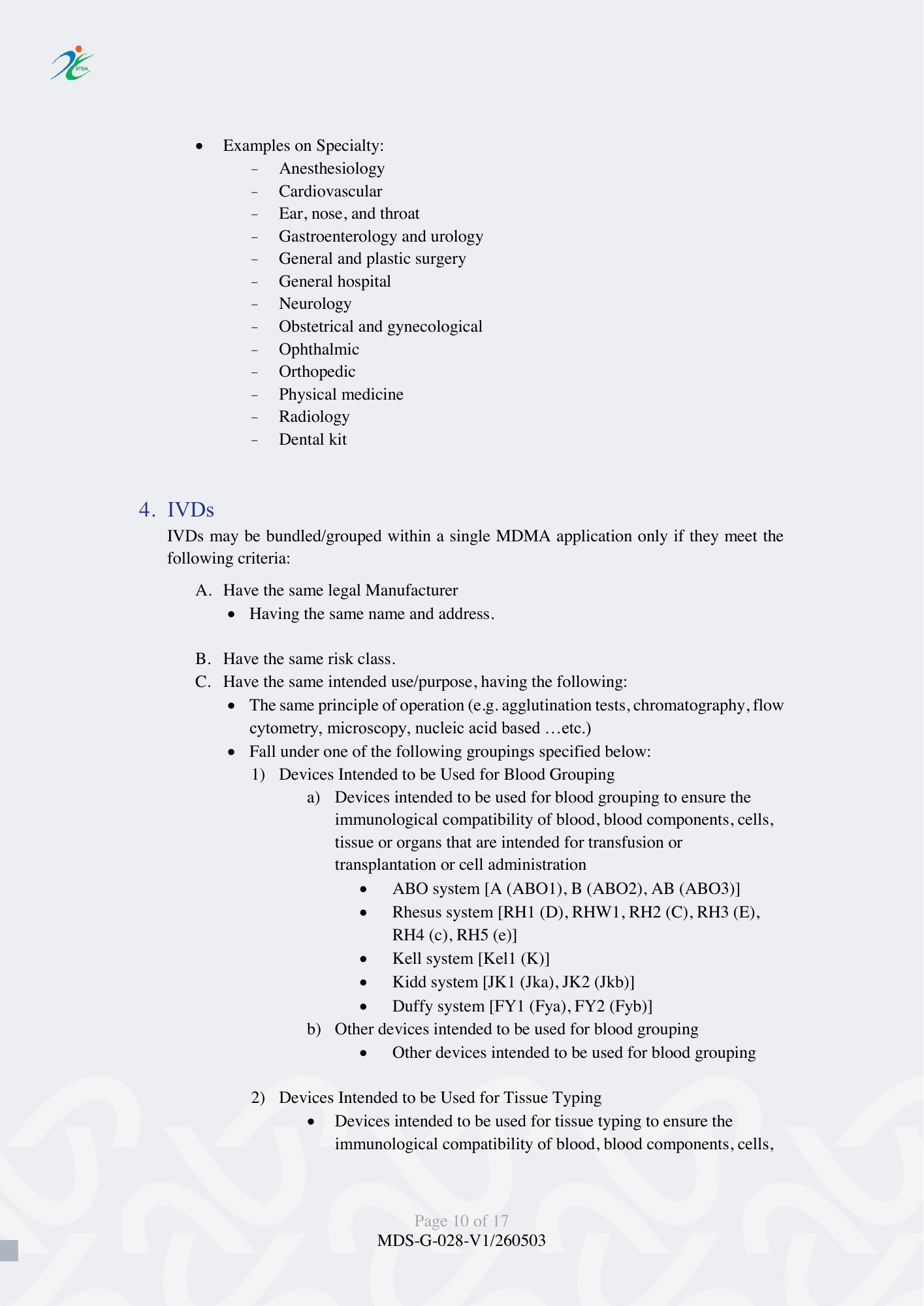
• Examples on Specialty: − Anesthesiology − Cardiovascular − Ear, nose, and throat − Gastroenterology and urology − General and plastic surgery − General hospital − Neurology − Obstetrical and gynecological − Ophthalmic − Orthopedic − Physical medicine − Radiology − Dental kit 4. IVDs IVDs may be bundled/grouped within a single MDMA application only if they meet the following criteria: A. Have the same legal Manufacturer • Having the same name and address. B. Have the same risk class. C. Have the same intended use/purpose, having the following: • The same principle of operation (e.g. agglutination tests, chromatography, flow cytometry, microscopy, nucleic acid based …etc.) • Fall under one of the following groupings specified below: 1) Devices Intended to be Used for Blood Grouping a) Devices intended to be used for blood grouping to ensure the immunological compatibility of blood, blood components, cells, tissue or organs that are intended for transfusion or transplantation or cell administration • ABO system [A (ABO1), B (ABO2), AB (ABO3)] • Rhesus system [RH1 (D), RHW1, RH2 (C), RH3 (E), RH4 (c), RH5 (e)] • Kell system [Kel1 (K)] • Kidd system [JK1 (Jka), JK2 (Jkb)] • Duffy system [FY1 (Fya), FY2 (Fyb)] b) Other devices intended to be used for blood grouping • Other devices intended to be used for blood grouping 2) Devices Intended to be Used for Tissue Typing • Devices intended to be used for tissue typing to ensure the immunological compatibility of blood, blood components, cells, Page 10 of 17 MDS-G-028-V1/260503
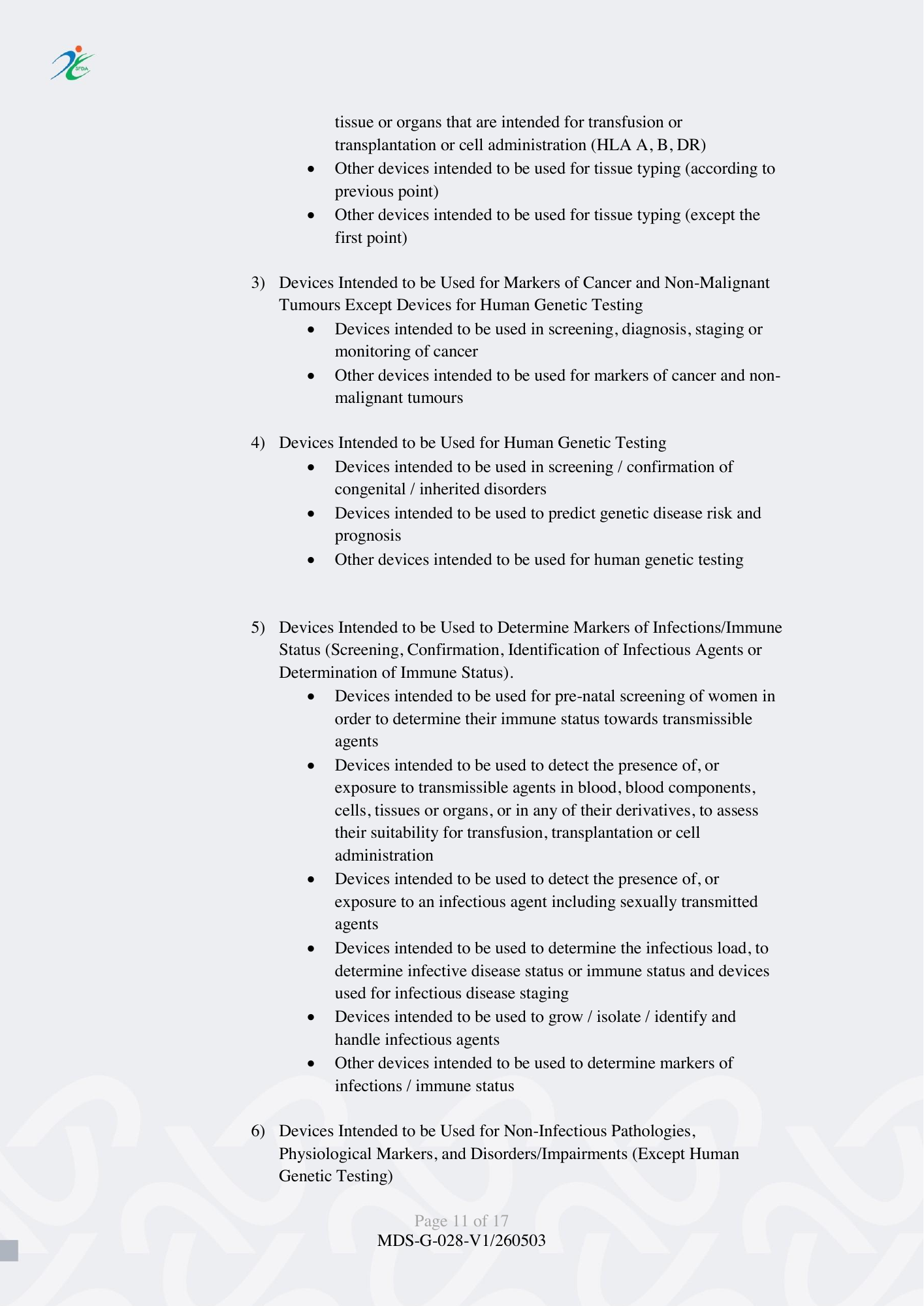
tissue or organs that are intended for transfusion or transplantation or cell administration (HLA A, B, DR) • Other devices intended to be used for tissue typing (according to previous point) • Other devices intended to be used for tissue typing (except the first point) 3) Devices Intended to be Used for Markers of Cancer and Non-Malignant Tumours Except Devices for Human Genetic Testing • Devices intended to be used in screening, diagnosis, staging or monitoring of cancer • Other devices intended to be used for markers of cancer and non- malignant tumours 4) Devices Intended to be Used for Human Genetic Testing • Devices intended to be used in screening / confirmation of congenital / inherited disorders • Devices intended to be used to predict genetic disease risk and prognosis • Other devices intended to be used for human genetic testing 5) Devices Intended to be Used to Determine Markers of Infections/Immune Status (Screening, Confirmation, Identification of Infectious Agents or Determination of Immune Status). • Devices intended to be used for pre-natal screening of women in order to determine their immune status towards transmissible agents • Devices intended to be used to detect the presence of, or exposure to transmissible agents in blood, blood components, cells, tissues or organs, or in any of their derivatives, to assess their suitability for transfusion, transplantation or cell administration • Devices intended to be used to detect the presence of, or exposure to an infectious agent including sexually transmitted agents • Devices intended to be used to determine the infectious load, to determine infective disease status or immune status and devices used for infectious disease staging • Devices intended to be used to grow / isolate / identify and handle infectious agents • Other devices intended to be used to determine markers of infections / immune status 6) Devices Intended to be Used for Non-Infectious Pathologies, Physiological Markers, and Disorders/Impairments (Except Human Genetic Testing) Page 11 of 17 MDS-G-028-V1/260503
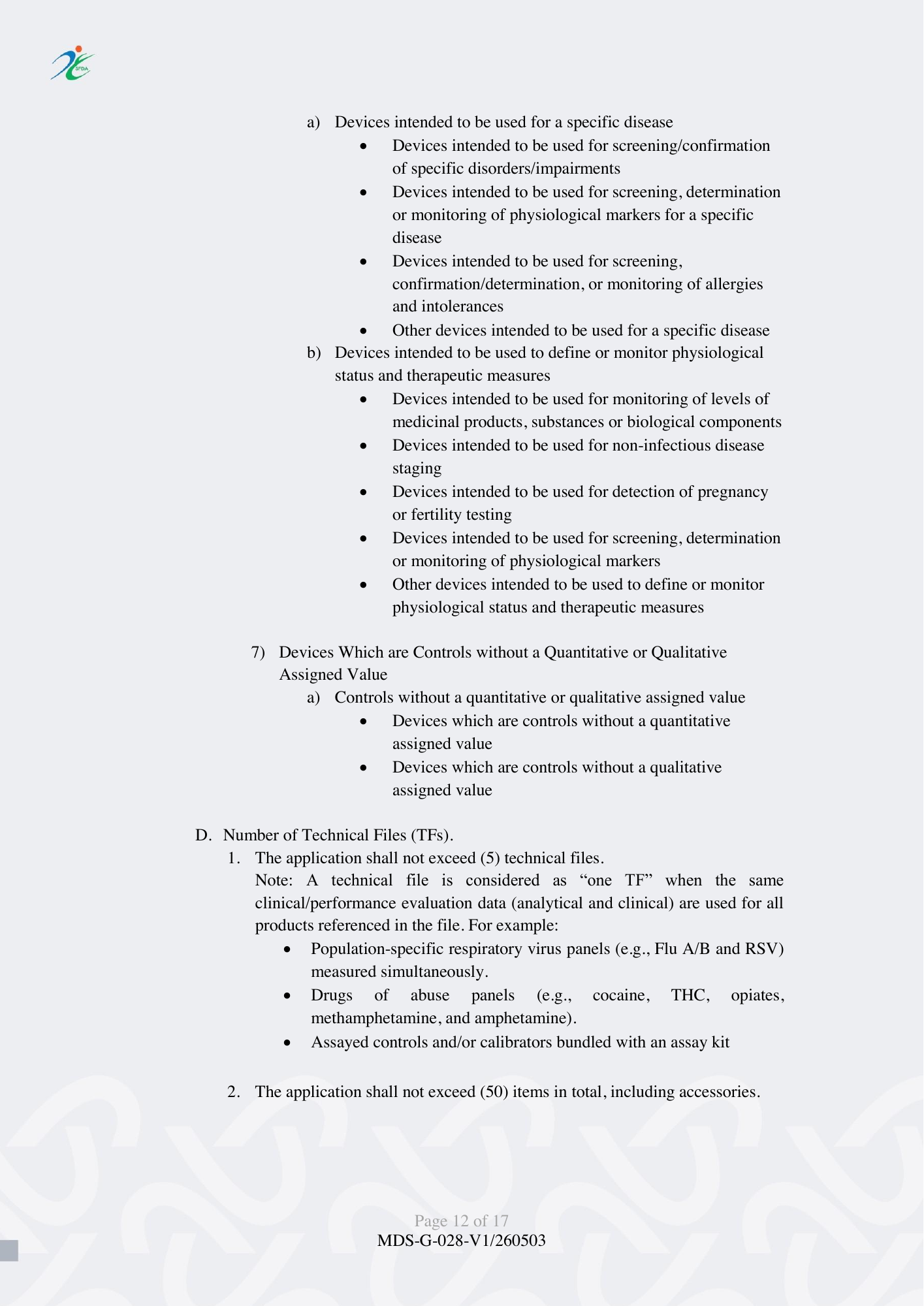
a) Devices intended to be used for a specific disease • Devices intended to be used for screening/confirmation of specific disorders/impairments • Devices intended to be used for screening, determination or monitoring of physiological markers for a specific disease • Devices intended to be used for screening, confirmation/determination, or monitoring of allergies and intolerances • Other devices intended to be used for a specific disease b) Devices intended to be used to define or monitor physiological status and therapeutic measures • Devices intended to be used for monitoring of levels of medicinal products, substances or biological components • Devices intended to be used for non-infectious disease staging • Devices intended to be used for detection of pregnancy or fertility testing • Devices intended to be used for screening, determination or monitoring of physiological markers • Other devices intended to be used to define or monitor physiological status and therapeutic measures 7) Devices Which are Controls without a Quantitative or Qualitative Assigned Value a) Controls without a quantitative or qualitative assigned value • Devices which are controls without a quantitative assigned value • Devices which are controls without a qualitative assigned value D. Number of Technical Files (TFs). 1. The application shall not exceed (5) technical files. Note: A technical file is considered as “one TF” when the same clinical/performance evaluation data (analytical and clinical) are used for all products referenced in the file. For example: • Population-specific respiratory virus panels (e.g., Flu A/B and RSV) measured simultaneously. • Drugs of abuse panels (e.g., cocaine, THC, opiates, methamphetamine, and amphetamine). • Assayed controls and/or calibrators bundled with an assay kit 2. The application shall not exceed (50) items in total, including accessories. Page 12 of 17 MDS-G-028-V1/260503
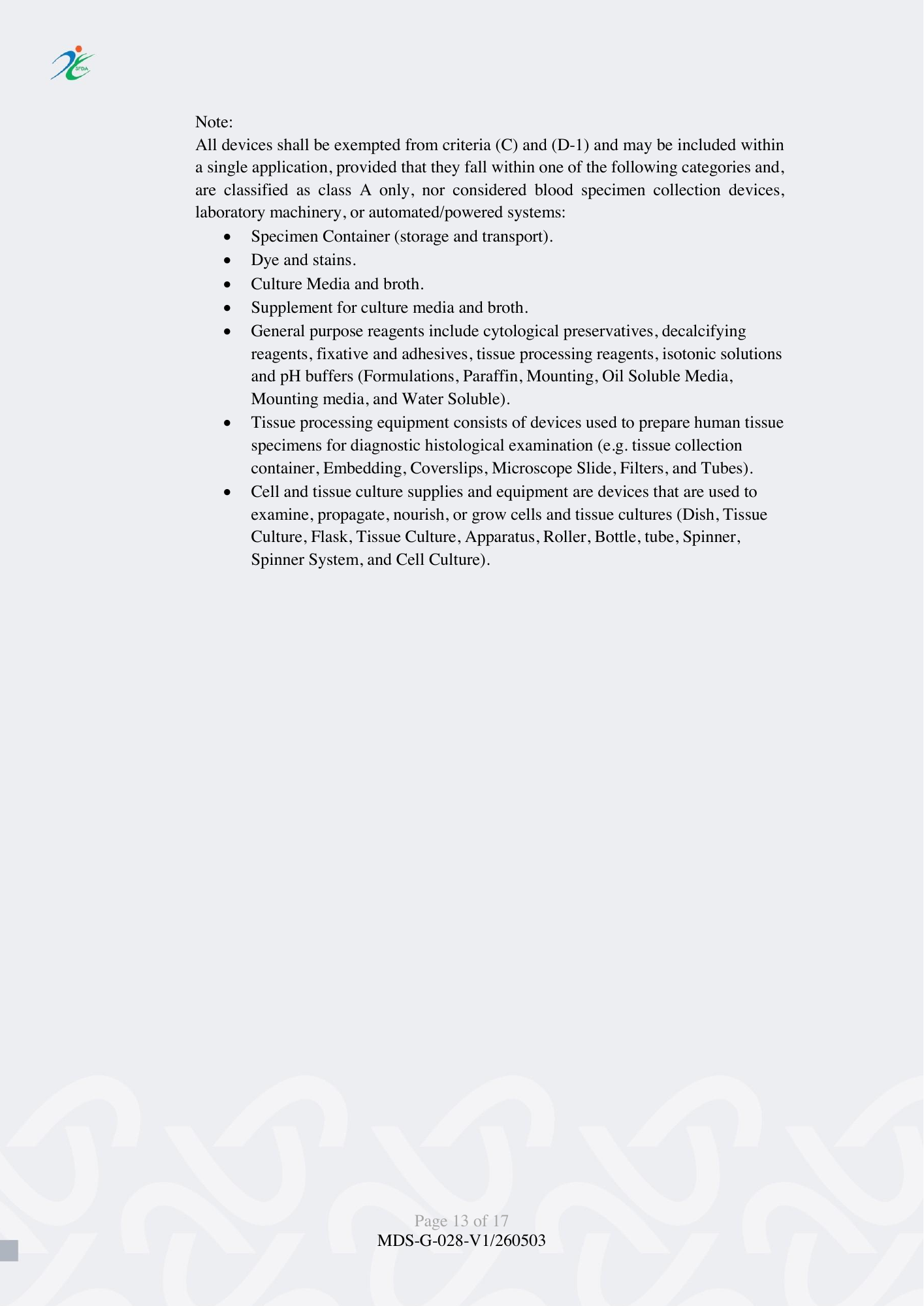
Note: All devices shall be exempted from criteria (C) and (D-1) and may be included within a single application, provided that they fall within one of the following categories and, are classified as class A only, nor considered blood specimen collection devices, laboratory machinery, or automated/powered systems: • Specimen Container (storage and transport). • Dye and stains. • Culture Media and broth. • Supplement for culture media and broth. • General purpose reagents include cytological preservatives, decalcifying reagents, fixative and adhesives, tissue processing reagents, isotonic solutions and pH buffers (Formulations, Paraffin, Mounting, Oil Soluble Media, Mounting media, and Water Soluble). • Tissue processing equipment consists of devices used to prepare human tissue specimens for diagnostic histological examination (e.g. tissue collection container, Embedding, Coverslips, Microscope Slide, Filters, and Tubes). • Cell and tissue culture supplies and equipment are devices that are used to examine, propagate, nourish, or grow cells and tissue cultures (Dish, Tissue Culture, Flask, Tissue Culture, Apparatus, Roller, Bottle, tube, Spinner, Spinner System, and Cell Culture). Page 13 of 17 MDS-G-028-V1/260503

Annexes Page 14 of 17 MDS-G-028-V1/260503
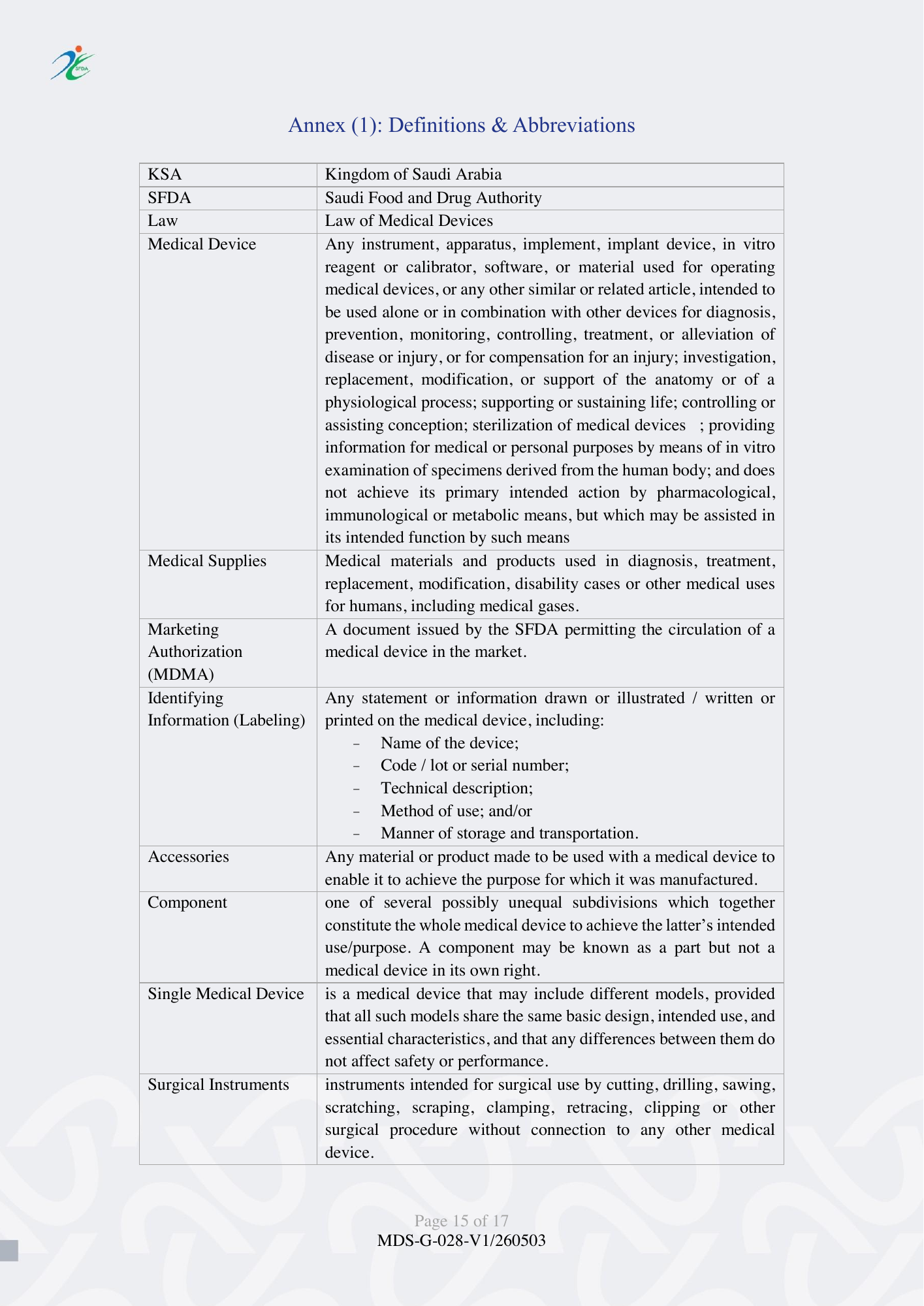
Annex (1): Definitions & Abbreviations KSA Kingdom of Saudi Arabia SFDA Saudi Food and Drug Authority Law Law of Medical Devices Medical Device Any instrument, apparatus, implement, implant device, in vitro reagent or calibrator, software, or material used for operating medical devices, or any other similar or related article, intended to be used alone or in combination with other devices for diagnosis, prevention, monitoring, controlling, treatment, or alleviation of disease or injury, or for compensation for an injury; investigation, replacement, modification, or support of the anatomy or of a physiological process; supporting or sustaining life; controlling or assisting conception; sterilization of medical devices ; providing information for medical or personal purposes by means of in vitro examination of specimens derived from the human body; and does not achieve its primary intended action by pharmacological, immunological or metabolic means, but which may be assisted in its intended function by such means Medical Supplies Medical materials and products used in diagnosis, treatment, replacement, modification, disability cases or other medical uses for humans, including medical gases. Marketing A document issued by the SFDA permitting the circulation of a Authorization medical device in the market. (MDMA) Identifying Any statement or information drawn or illustrated / written or Information (Labeling) printed on the medical device, including: − Name of the device; − Code / lot or serial number; − Technical description; − Method of use; and/or − Manner of storage and transportation. Accessories Any material or product made to be used with a medical device to enable it to achieve the purpose for which it was manufactured. Component one of several possibly unequal subdivisions which together constitute the whole medical device to achieve the latter’s intended use/purpose. A component may be known as a part but not a medical device in its own right. Single Medical Device is a medical device that may include different models, provided that all such models share the same basic design, intended use, and essential characteristics, and that any differences between them do not affect safety or performance. Surgical Instruments instruments intended for surgical use by cutting, drilling, sawing, scratching, scraping, clamping, retracing, clipping or other surgical procedure without connection to any other medical device. Page 15 of 17 MDS-G-028-V1/260503
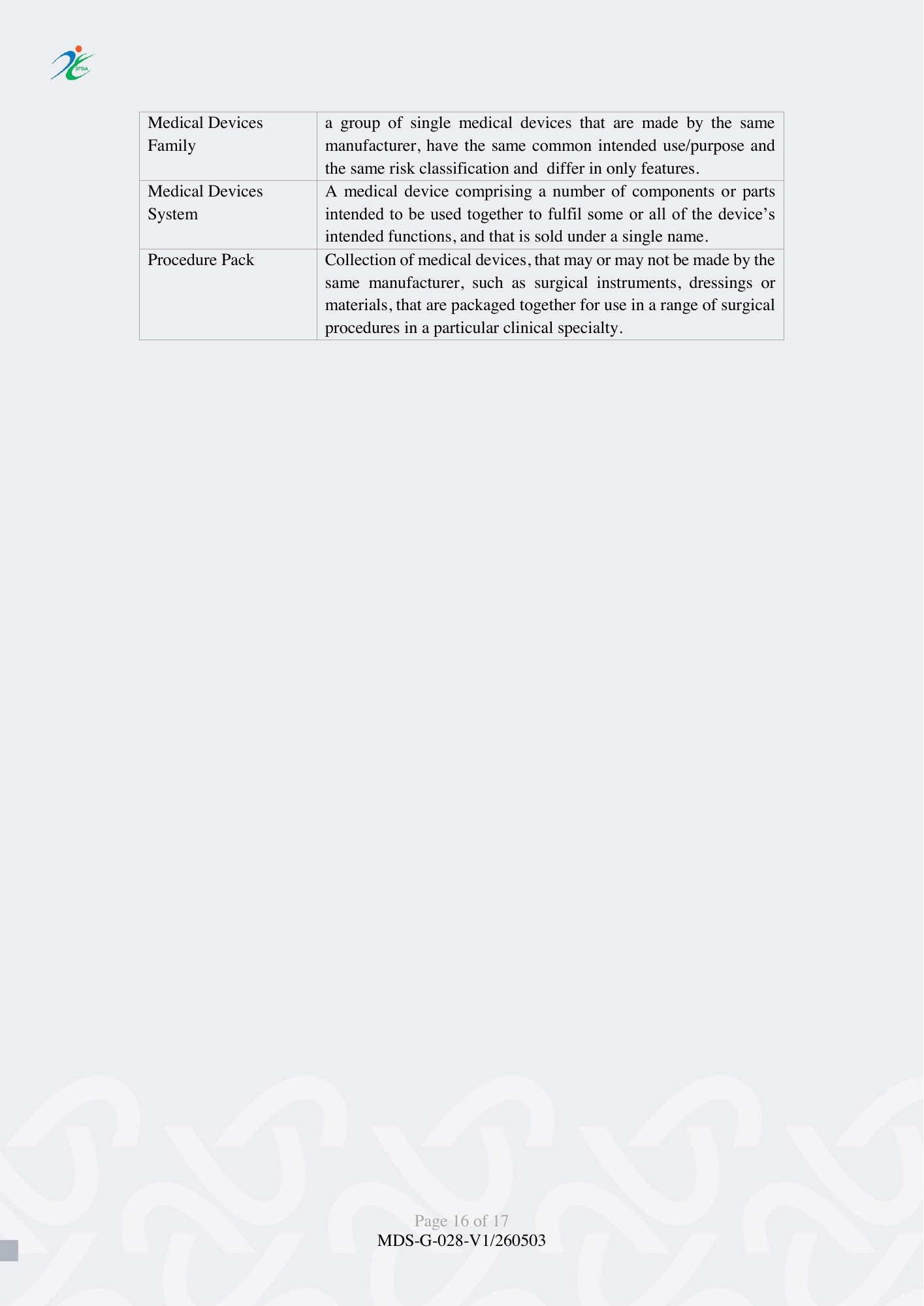
Medical Devices a group of single medical devices that are made by the same Family manufacturer, have the same common intended use/purpose and the same risk classification and differ in only features. Medical Devices A medical device comprising a number of components or parts System intended to be used together to fulfil some or all of the device’s intended functions, and that is sold under a single name. Procedure Pack Collection of medical devices, that may or may not be made by the same manufacturer, such as surgical instruments, dressings or materials, that are packaged together for use in a range of surgical procedures in a particular clinical specialty. Page 16 of 17 MDS-G-028-V1/260503
Annex (2): List of Changes on the Previous Version Number and Date of the Changes Description Previous Version 0.0 − New document − Replaces Annex (15) of “Requirements for Medical Devices Marketing Authorization (MDS-REQ1)” Page 17 of 17 MDS-G-028-V1/260503