1. Introduction
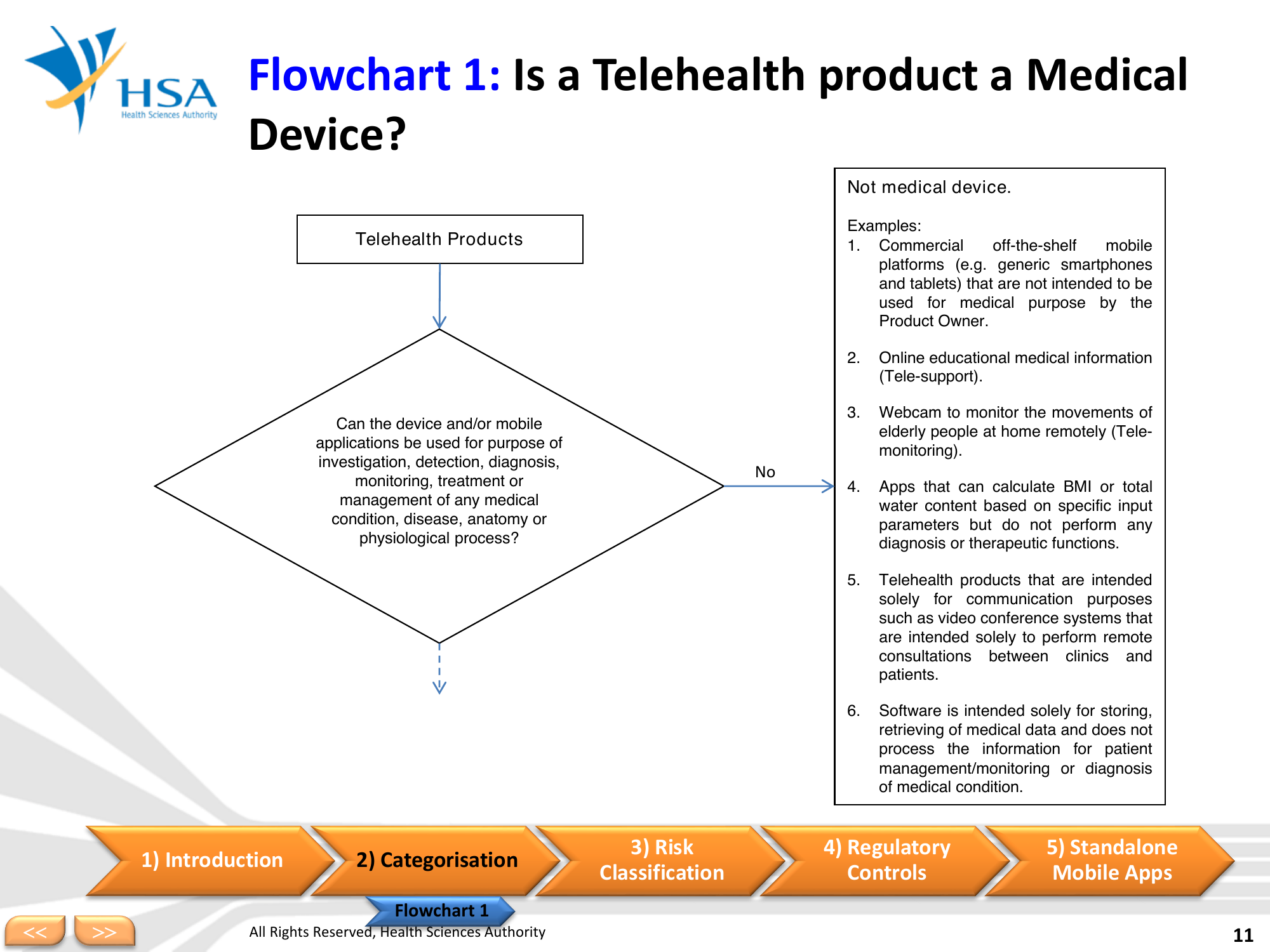
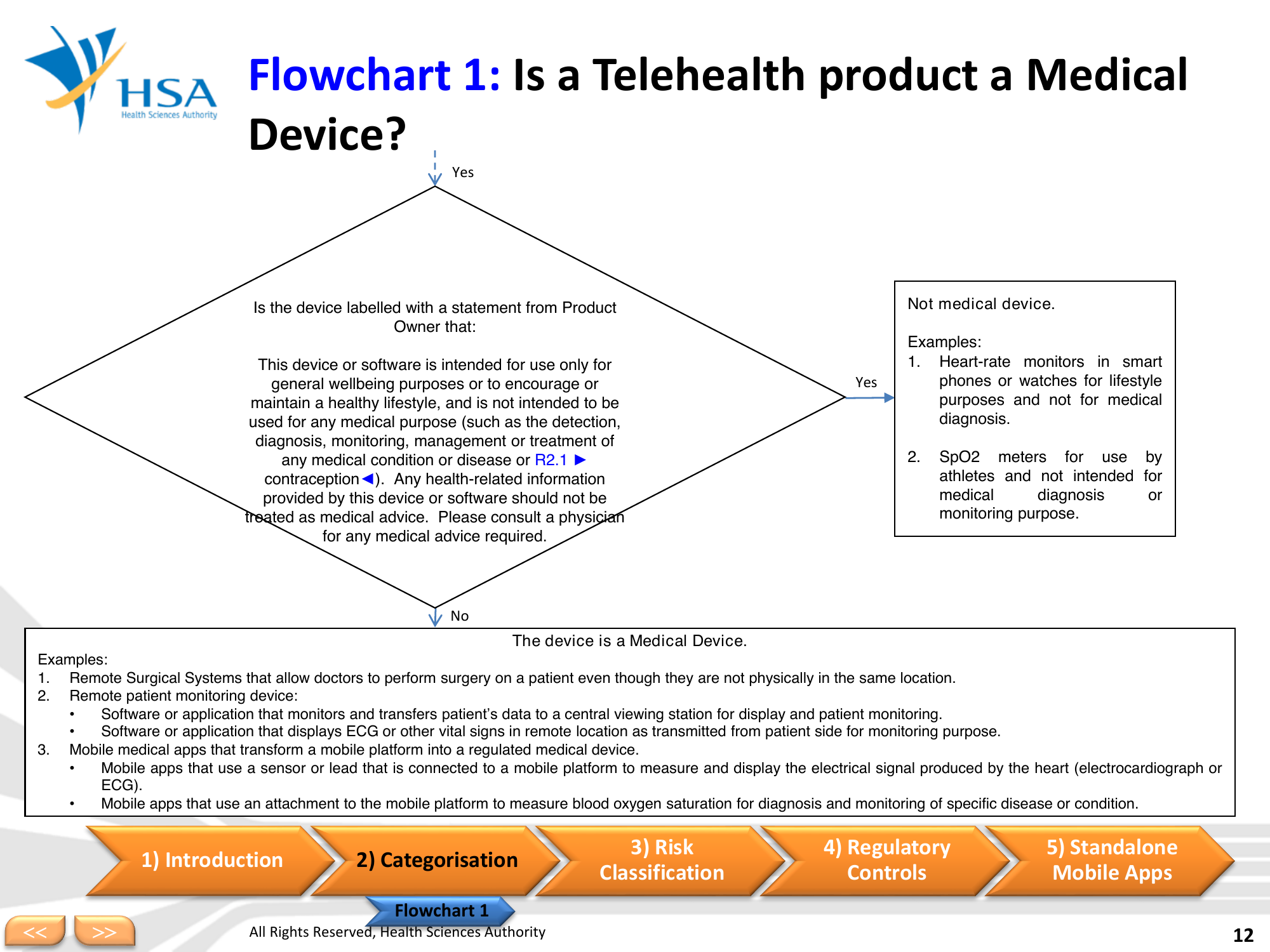
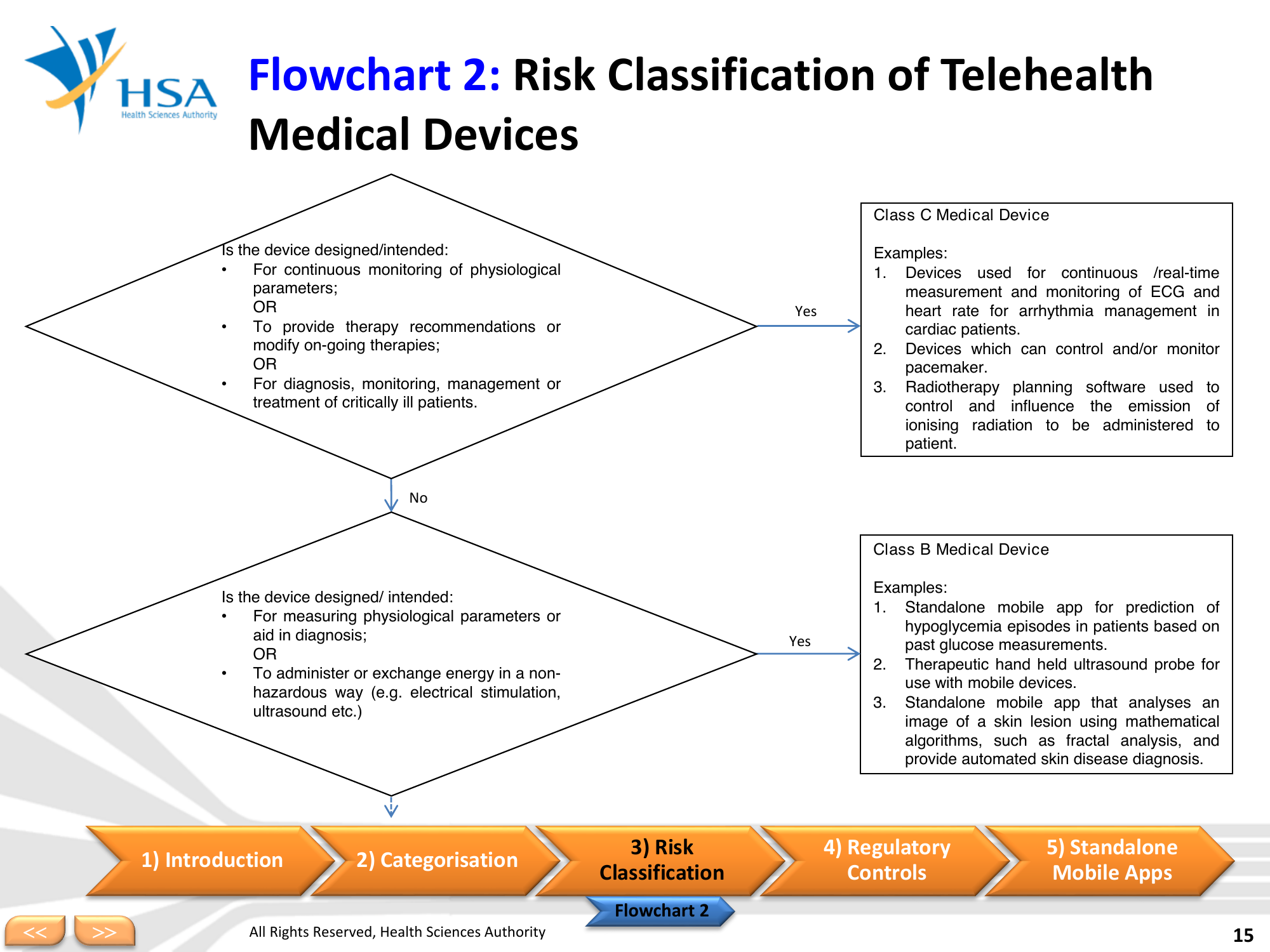
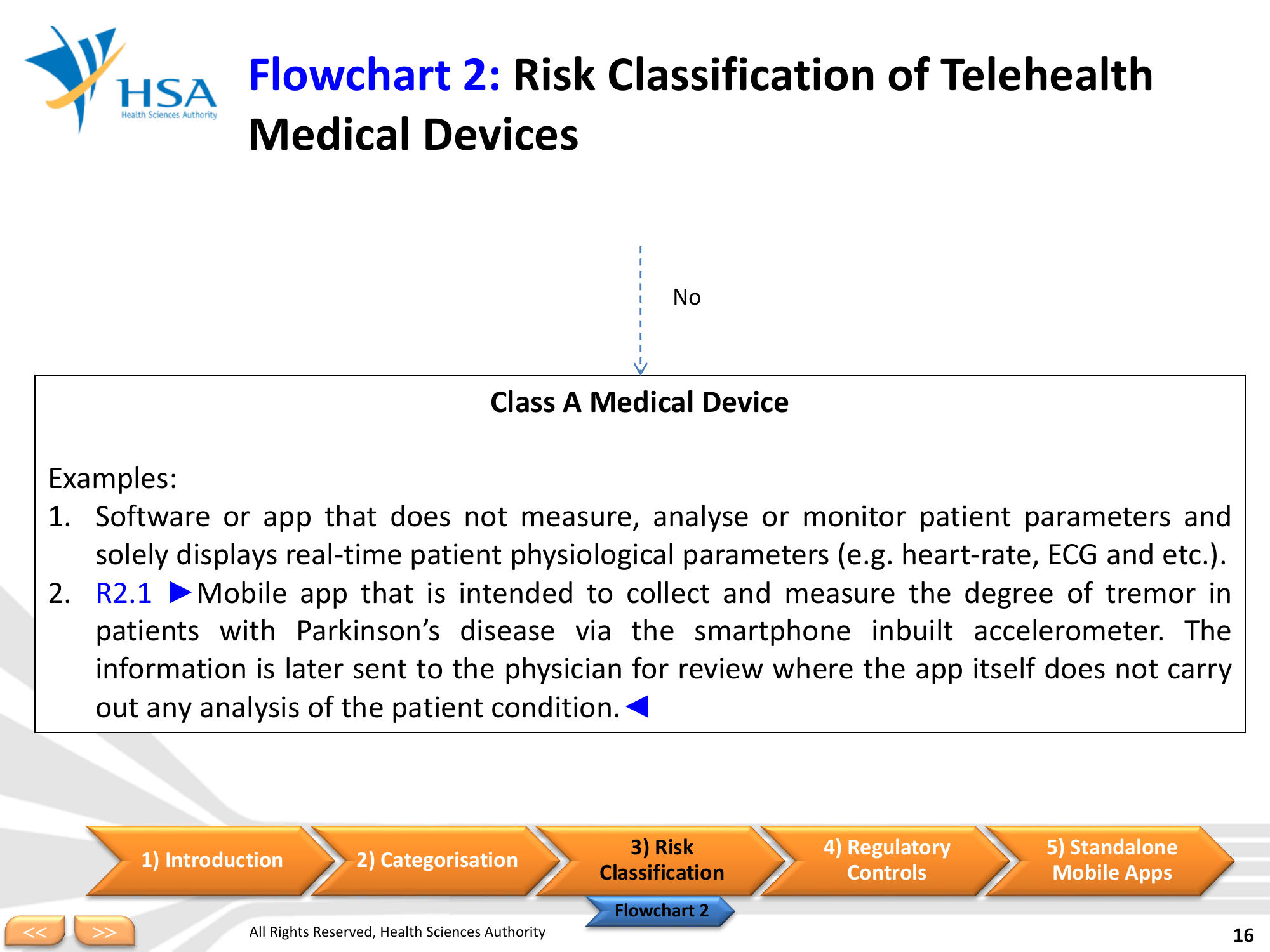
1.1 Objective The Health Sciences Authority (HSA) is issuing these guidelines to provide clarity on the types of Telehealthproducts that are regulated as medical devices, as well as its current regulatory approach and requirements for such products regulated by HSA. The guidelines reflect HSA’s current policy stance and practice, and should not be misconstrued as a new regulatory control on Telehealthproducts. 1.2 Background Telehealthproducts are instruments, apparatus, machines or software (including mobile applications) that are involved in the provision of healthcare services over physically separate environments via infocommtechnologies (including mobile technology),categorisedinto four broad domains: •Tele-collaboration; •Tele-treatment; •Tele-monitoring; •Tele-support. As not all Telehealthproducts in the market are medical devices, this document serves to provide clear guidelines on identifying a Telehealthmedical device. As a general rule, a Telehealthproduct intended for medical purposessuch as investigation, detection, diagnosis, monitoring, treatment or management of any medical condition, disease, anatomy or physiological process; will be classified as a medical device subject to regulatory controls by HSA. In recent years, Telehealthtechnology has advanced at a rapid pace of innovation and introduced a myriad of benefits, along with some potential risks to public health. As part of Singapore’s Smart Nation initiatives, HSA aims to refine and streamline its regulatory framework for Telehealthmedical devices, so as to promote better innovation and efficiency in our healthcare sector. The regulatory approach adopted will be largely similar to the regulatory principles applied in the regulation of the other medical devices –they are: •Risk-based regulation –HSA employs a rule-based approach (GN-13: Guidance on Risk Classification of General Medical Devices) to classify medical devices into four risk classes (A, B, C & D), according to the nature of the device and its intended functions. The level of scrutiny and regulatory requirements on a medical device will in turn commensurate with its risk class. •Confidence-based regulation –The evaluation routes (e.g. Immediate Class B/C Registration route, Expedited Class C/D Registration routes and etc.) for medical devices are set out according to a confidence based approach by leveraging on the approvals of HSA’s reference regulatory agencies and/or prior safe marketing history of the medical devices. The submission requirements (GN-15: Guidance on Medical Device Product Registration) are titrated according to the evaluation routes that the device qualifies. This will allow faster access to new and innovative Telehealthmedical devices to provide high quality Telehealthservices to healthcare professionals, patients and consumers, whilst safeguarding public health. 1.3 Scope This document applies to all Telehealthproducts which include hardware devices, software and mobile applications, specifically on the classification and regulation of such products. It does not cover the practice of Telehealthservices as this falls out of HSA’s purview. 1.4 Definitions PRODUCT OWNER (as stated in the Medical Device Regulations): in relation to a health product, is defined as a person who — suppliesthe health product under his own name, or under any trade mark, design, trade name or other name or mark owned or controlled by him; and is responsible for designing, manufacturing, assembling, processing, labelling, packaging, refurbishing or modifying the health product, or for assigning to it a purpose, whether those tasks are performed by him or on his behalf. TELEHEALTH: The provision of healthcare services over physically separate environments via infocomm technologies,categorisedinto four broad domains: •Tele-collaboration; •Tele-treatment; •Tele-monitoring; •Tele-support. TELE-COLLABORATION:It refers to interactions between (facility-based or mobile) onsite and remote healthcare professionals for clinical purposes e.g. referral, co-diagnosis, supervision or case review. TELE-TREATMENT: It refers to the provision of direct clinical care e.g. triage, history, examination, diagnosis and treatment including robotic surgery from a remote location via infocommtechnologies (including mobile technology). TELE-MONITORING: It refers to biomedical and other forms of data collection directly from patients (or through caregivers) by remote systems, which are used by healthcare professionals for clinical purposes such as vital signs monitoring and home nursing. Tele-monitoring is used in remote chronic disease management e.g. management of hypertension (blood pressure), diabetes (blood glucose) and coronary heart disease (weight, ECG). TELE-SUPPORT:It refers to the use of online services for non-clinical (i.e. educational and administrative) purposes to support the patient, caregiver or user. TELEHEALTH PRODUCTS: All forms of devices, including hardware devices, software and mobile applications, used in the delivery of Telehealthservices.WELLNESS DEVICE: A device or software which is intended by its Product Owner to be used only to enable or encourage the user of the device or software to adopt or maintain a healthy lifestyle, or for the user’s general wellbeing, but not to be used for any specific medical purposes.